Concert
Adam Pierończyk feat. Gary Thomas // Leszek Możdżer // Tomasz Stańko
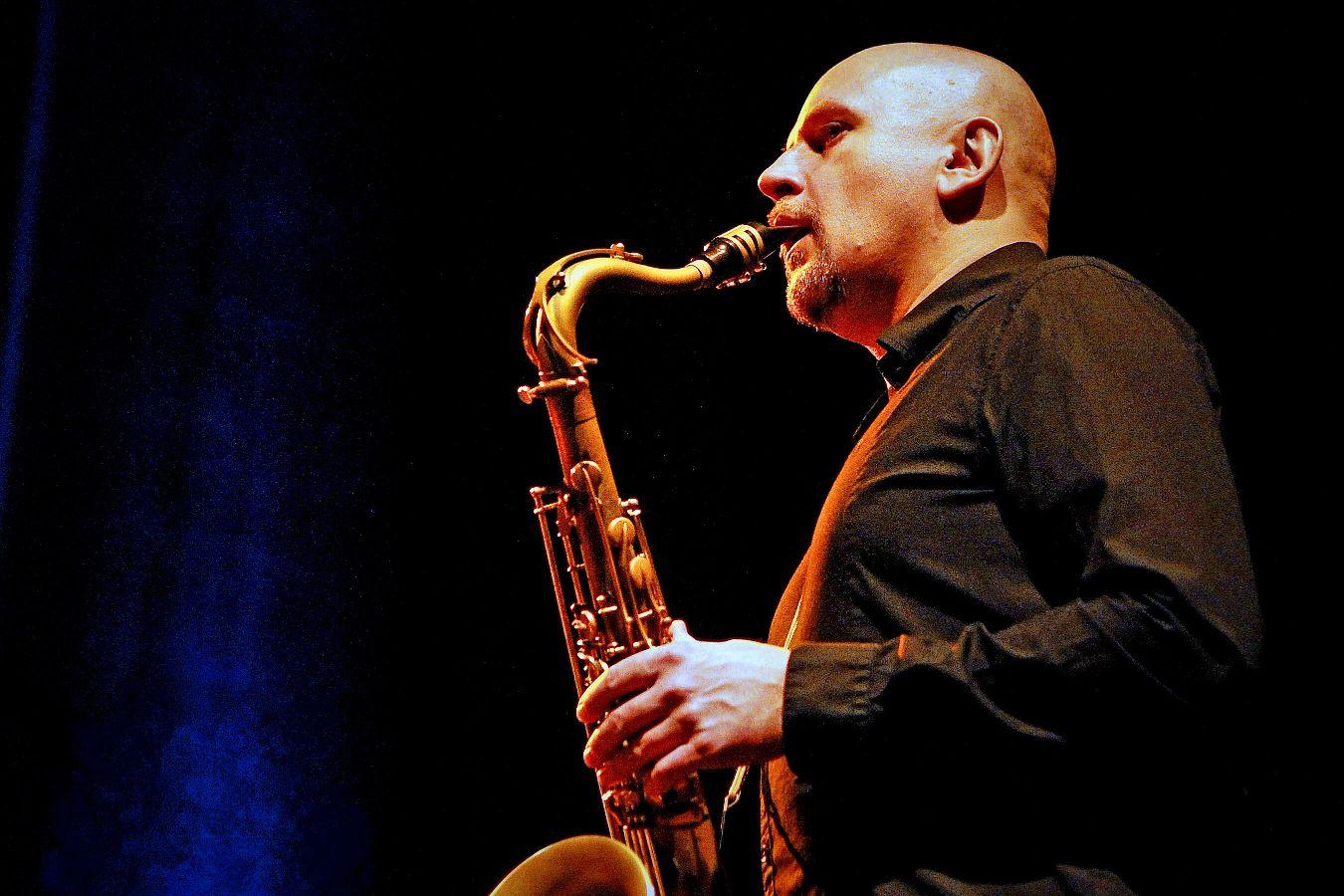
Adam Pierończyk © Lech Basel
Adam Pierończyk feat. Gary Thomas
Adam Pierończyk belongs to a younger generation of Polish musicians who concern themselves with their national jazz history in a fresh and jaunty way. On his cd Komeda – The Innocent Sorcerer he celebrates a nostalgia-free homage to the sonic universe of the great jazz pioneer and film composer Komeda; And much like his musical ancestor, Pierończyk manages to conjure musical magic with relatively simple means.
New York’s Cadence magazine certifies him to be “a discovery, for he has a lovely warm tone and a clever imagination, but he can also blow for the borders.” Besides playing with Polish musicians Tomasz Stańko or Leszek Możdżer the Krakow-based saxophonist has worked with international stars like Greg Osby, Sam Rivers, Archie Shepp and Ted Curson.
“Adam Pierończyk is among the very finest of the Polish jazz scene. He is successful like few others in combining instrumental virtuosity, precision, and intellectual refinement with an emotionality that borders on exhibitionism. He burns in his improvisations, and the listener burns with him.”
(Gazeta Wyborcza)
Leszek Możdżer
Starting from Frédéric Chopin as originator, Poland looks back on a long tradition of piano esthetes. After Krzysztof Komeda, Mieczysław Kosz and Adam Makowicz, outstanding pianist/composer/producer, Leszek Możdżer is widely considered to be the greatest revelation of Polish jazz of the last decade, eventually proving Frankfurter Allgemeine’s prediction right: “Leszek Możdżer, one of the greatest piano virtuosos, could easily be dubbed the Star of the East”. Over the years he has recorded more than 100 albums, not only with all the stars of the Polish scene but also with the likes of John Scofield, Pat Metheny or Lars Danielsson.
With his solo-project, Komeda, Możdżer not only fathoms the universe of the legendary film composer. He re-translates his great ancestor’s sonic world back into the classical context from which Komeda had drawn his essential impulses 40 years earlier.
Tomasz Stańko ‘Litania’
Tomasz Stańko was 20 and a graduate of the Cracow Music Academy when he formed his first band, the Jazz Darings, with pianist Adam Makowicz in 1962. Inspired by early Ornette Coleman and the innovations of Coltrane, Miles Davis and George Russell, the group is often cited by music historians as the first European group to play free jazz, but for the trumpeter its importance was eclipsed by the invitation to join Krzysztof Komeda’s quintet the following year. Stańko toured for five years with Komeda, appeared on eleven albums with him, and also made contributions to all of the films scores that Komeda realized in Poland.
In 1970, Stańko joined Alex Schlippenbach’s Globe Unity Orchestra, which brought him into contact with all the key figures of the European jazz avant-garde, and also formed a quintet, with violinist Zbigniew Seifert. The following year he collaborated with Krysztof Penderecki and Don Cherry. His most important work of the 1970s, however, may have been with Finnish drummer Edward Vesala.
During the 1980s Tomasz Stanko explored many approaches to improvisation and when many Polish musicians left the country in the late eighties he kept true his roots. From his Polish homebase he went travelling to India, worked extensively with Cecil Taylor and, together with the crop of the Scandinavian scene, did recordings for ECM – amongst them the album Litania (1996).
The JazzFest Berlin 2011 edition will see an updated version of this Komeda-tribute, with members of Stańko’s ‘house band’, the Wasilewski Trio, and Joakim Milder from the original cast.
Adam Pierończyk feat. Gary Thomas
‘Komeda – The Innocent Sorcerer’
Adam Pierończyk – saxophones
Gary Thomas – tenor saxophone
Nelson Veras – guitar
Max Mucha – bass
Łukasz Żyta – drums
Leszek Możdżer
Leszek Możdżer – piano
Tomasz Stańko ‘Litania’
Tomasz Stańko – trumpet
Mark Turner – saxophone
Joakim Milder – saxophone
Marcin Wasilewski – piano
Sławomir Kurkiewicz – bass
Michał Miśkiewicz – drums
Adam Pierończyk
© Lech Basel

Leszek Możdżer
© Kamil Gozdan

Tomasz Stańko
© Caroline Forbes ECM Records
Tomasz Stańko ‘Litania’ is supported by