Concert
NDR Elbphilharmonie Orchester
Alan Gilbert, conductor
Henze / Brahms
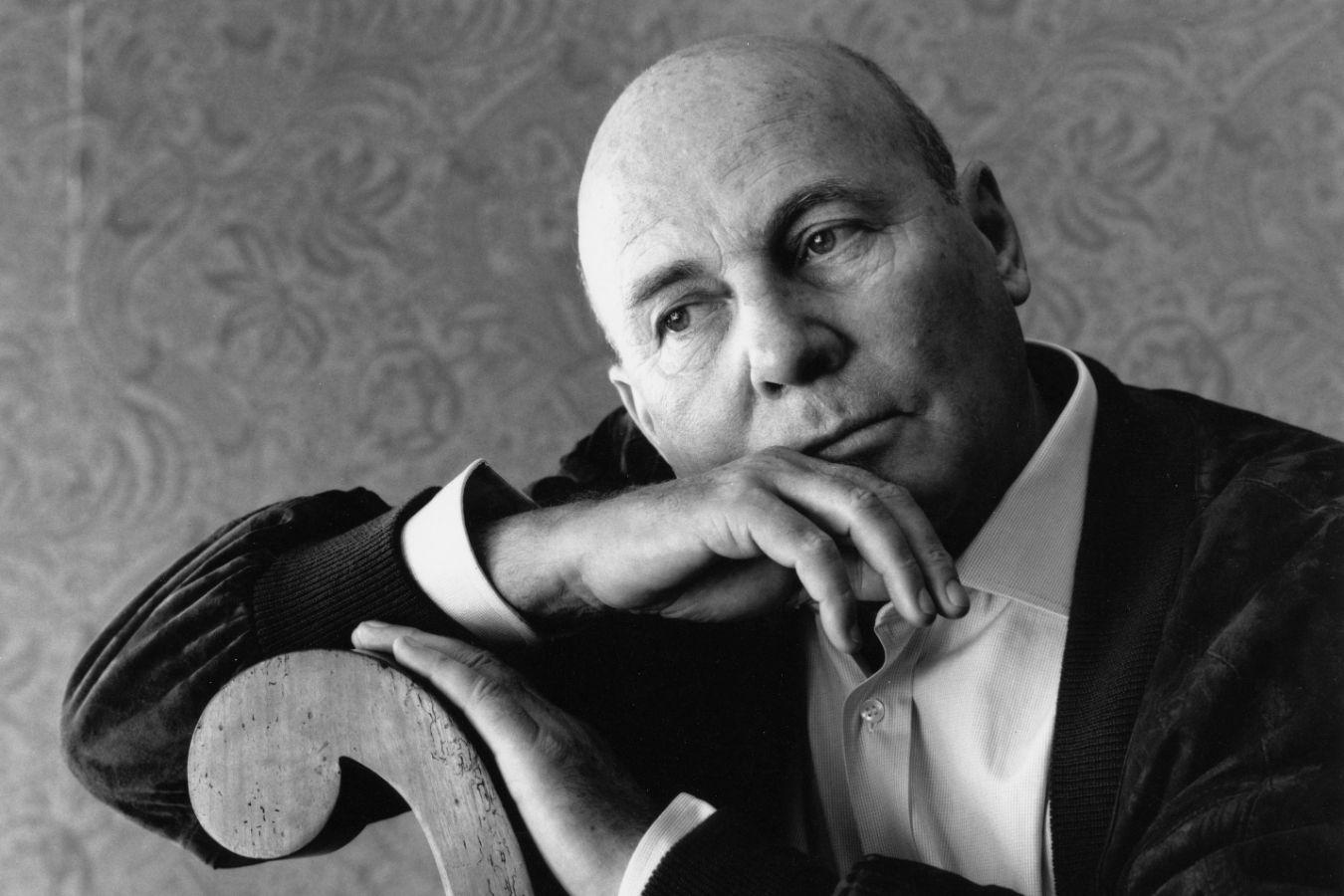
Hans Werner Henze © Malcolm Crowthers
Hans Werner Henze had already become a legend during his lifetime. To mark the centenary of his birth, the NDR Elbphilharmonie Orchester conducted by Alan Gilbert marks its debut at Musikfest Berlin alongside pianist Tamara Stefanovich with a performance of Henze’s Preludes for piano, tapes and orchestra with the enigmatic title Tristan. This is poignant funeral music containing quotations from works such as Johannes Brahms’s Symphony No. 1 which also features in this concert.
 Digital programme booklet from August
Hans Werner Henze made it clear that he desired his Tristan Preludes for piano, tapes and orchestra composed in 1973 to be understood as “audio-visual”: as a tonal drama on the concert stage. Right from the first bar, the highly emotional music reflects pain, yearning, love, grief and parting – Henze described his composition as a “scream of death” from the orchestra. Alongside references to Wagner (Tristan und Isolde and the Wesendonck-Lieder), the six-section work with its “coup de théâtre” additionally contains quotations from Brahms and distorted taped sounds of Frédéric Chopin’s funeral march from his Piano Sonata in B minor, “glistening like the sea on an autumn evening” (Henze). The concluding epilogue features a taped child’s voice reciting verses narrating Isolde’s tragic “love-death” by the 12th-century Anglo-Norman poet Thomas d’Angleterre in an English translation. After Henze’s funeral music with prominent piano part which mourns for all the dead “whose loss has now impoverished humanity”, Alan Gilbert and the NDR Elbphilharmonie Orchester dedicate their attention to Johannes Brahms’s Symphony No. 1 which adheres on a dramatic level to Beethoven’s epigram “per aspera ad astra” [through darkness to light]. The bleak struggle in the C minor opening movement with its forceful timpani beats and sudden dramatic swings stands in contrast to the finale which ultimately finds its conclusion in a supremely radiant C major.
Programme
Hans Werner Henze (1926–2012)
Tristan
Préludes for piano, tapes and orchestra (1973, rev. 1991)
I Prologue – II Lament – III Prelude and Variations – IV Tristan’s Folly – V Adagio: Burla I, Burla II, Ricercare I, Burla III, Ricercare II – VI Epilogue
Johannes Brahms (1833–1897)
Symphony No. 1 in C minor op. 68 (1862–77)
Contributors
Tamara Stefanovich – piano
Holger Busse – sound director
NDR Elbphilharmonie Orchester
Alan Gilbert – conductor
A Berliner Festspiele / Musikfest Berlin event