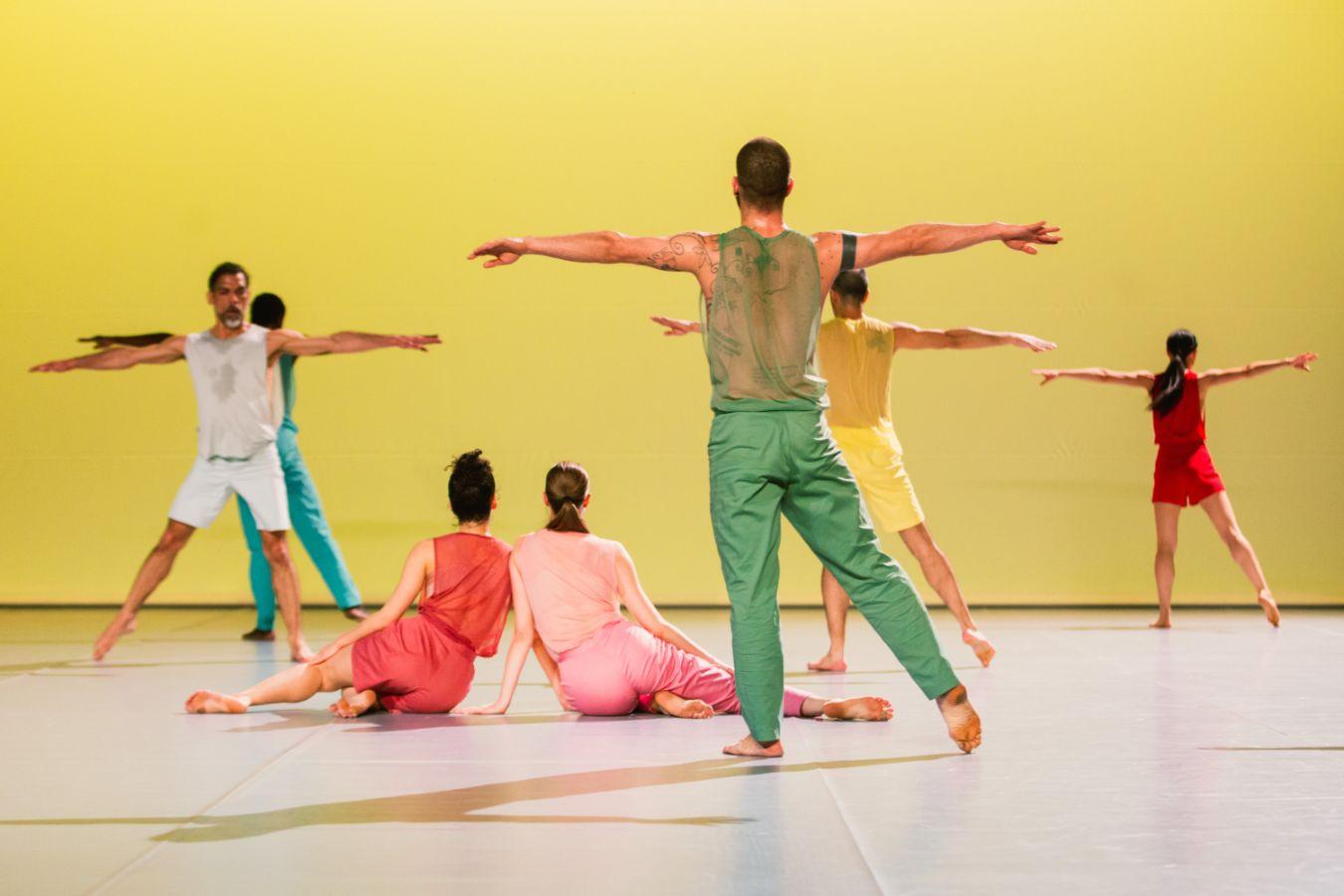

Deutsches Symphonie-Orchester Berlin © Lea Hopp
Deutsches Symphonie-Orchester Berlin
The Deutsches Symphonie-Orchester Berlin (DSO) was highlighted by the renowned national newspaper Süddeutsche Zeitung as the “orchestral think tank” among the capital city’s orchestras. It is characterized by the rich dramaturgy of its concert programmes, its commitment to contemporary music and regular discoveries of repertoire, as well as the courage to pursue unusual music presentation formats. The DSO has set innovative impulses with electro projects, the production of extraordinary music films, interdisciplinary cooperation and collaboration with ensembles on the independent scene. With its moderated casual concerts including lounge and live act, it has been successfully building a bridge between club and classical music for over 15 years, reaching a broad and diverse audience. Since 2014, it has been bringing amateur musicians together with professionals to form Berlin’s largest spontaneous orchestra, the Symphonic Mob – a concept that is now also licensed throughout Europe.
In the 2023/24 season, the DSO attracted worldwide attention with a feminist music policy initiative under the motto No Concert Without a Female Composer!; in 2024/25 it underlined the positioning for an open society and the advocacy for marginalized groups in various concert programmes with the campaign Orchestra for Democracy. The DSO remained true to this self-image in the 2025/26 season: under the title Afrodiaspora – Composing While Black, it became the first orchestra worldwide to place the music of Black composers at the centre of its programming, commissioned new works, and presented cellist Abel Selaocoe as Artist in Focus.
With its many guest performances, the DSO is present on the national and international music scene. The orchestra has performed in recent years in Brazil and Argentina, in Japan, China, Malaysia, Abu Dhabi and Eastern Europe, as well as at major festivals such as the Salzburg Festival or BBC Proms. The DSO also has a global presence with numerous award-winning CD recordings. In 2011, it received the Grammy Award for the world premiere recording of Kaija Saariaho’s opera L’amour de loin conducted by Kent Nagano.
Founded as the RIAS Symphony Orchestra in 1946, it was renamed the Radio Symphony Orchestra Berlin in 1956 and has borne its current name since 1993. Since its inception, the DSO has been able to retain outstanding artist personalities. As the first Music Director, Ferenc Fricsay defined the standards in terms of repertoire, acoustic ideal and media presence. In 1964, the young Lorin Maazel assumed artistic responsibility. In 1982, he was followed by Riccardo Chailly and in 1989 by Vladimir Ashkenazy. Kent Nagano was appointed Music Director in 2000. Since his departure in 2006, he has been associated with the orchestra as a Conductor Laureate. From 2007 to 2010, Ingo Metzmacher, from 2012 to 2016, Tugan Sokhiev, and from 2017 to 2024, Robin Ticciati set decisive accents in the musical life of the capital. They will be succeeded by the Japanese Kazuki Yamada, who will lead the DSO as Music Director from the start of the 2026/2027 season.
The Deutsches Symphonie-Orchester Berlin is an ensemble of the Radio Orchestra and Choirs gGmbH (ROC Berlin). The shareholders are Deutschlandradio, the Federal Republic of Germany, the State of Berlin and Radio Berlin-Brandenburg.
As of: April 2026