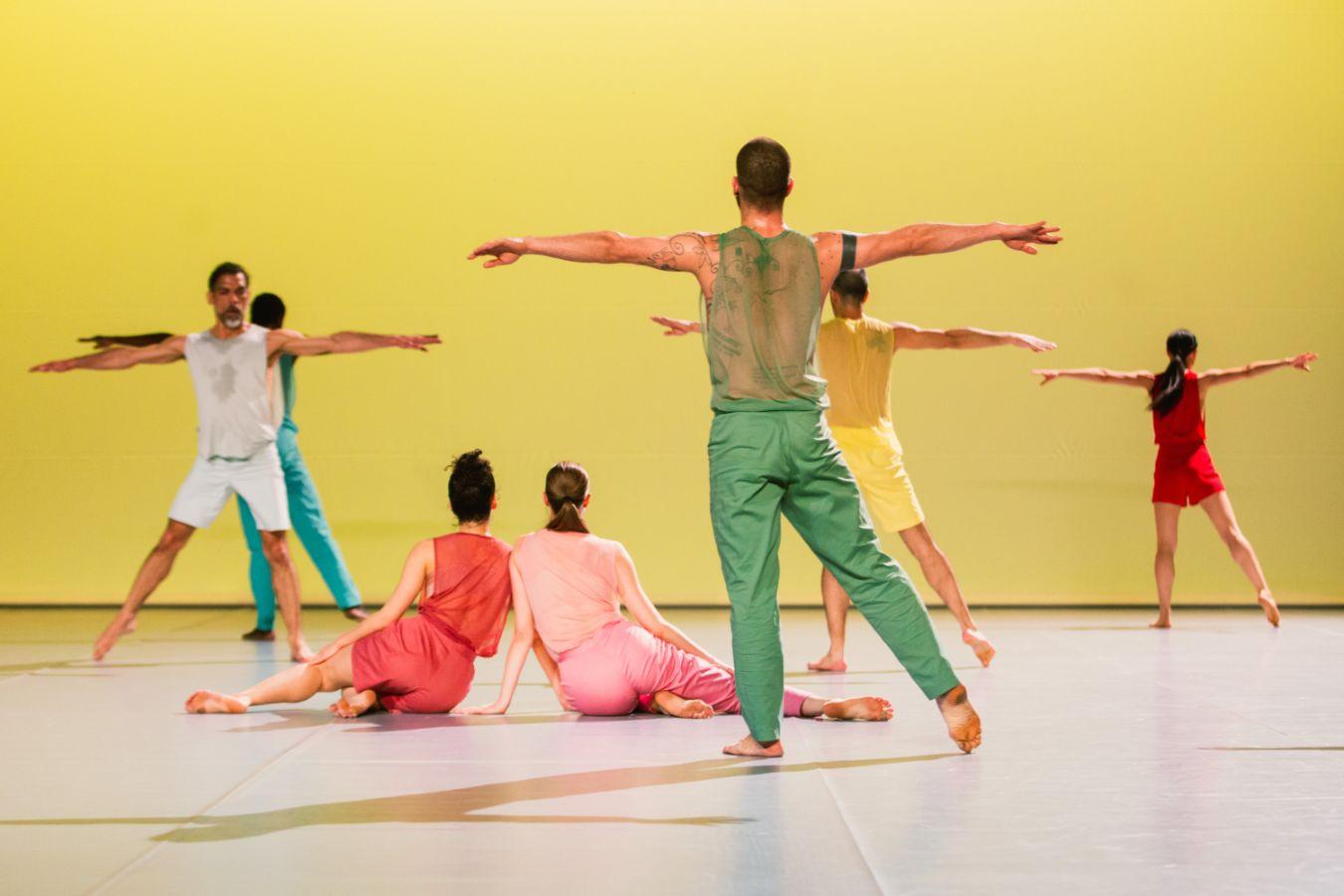
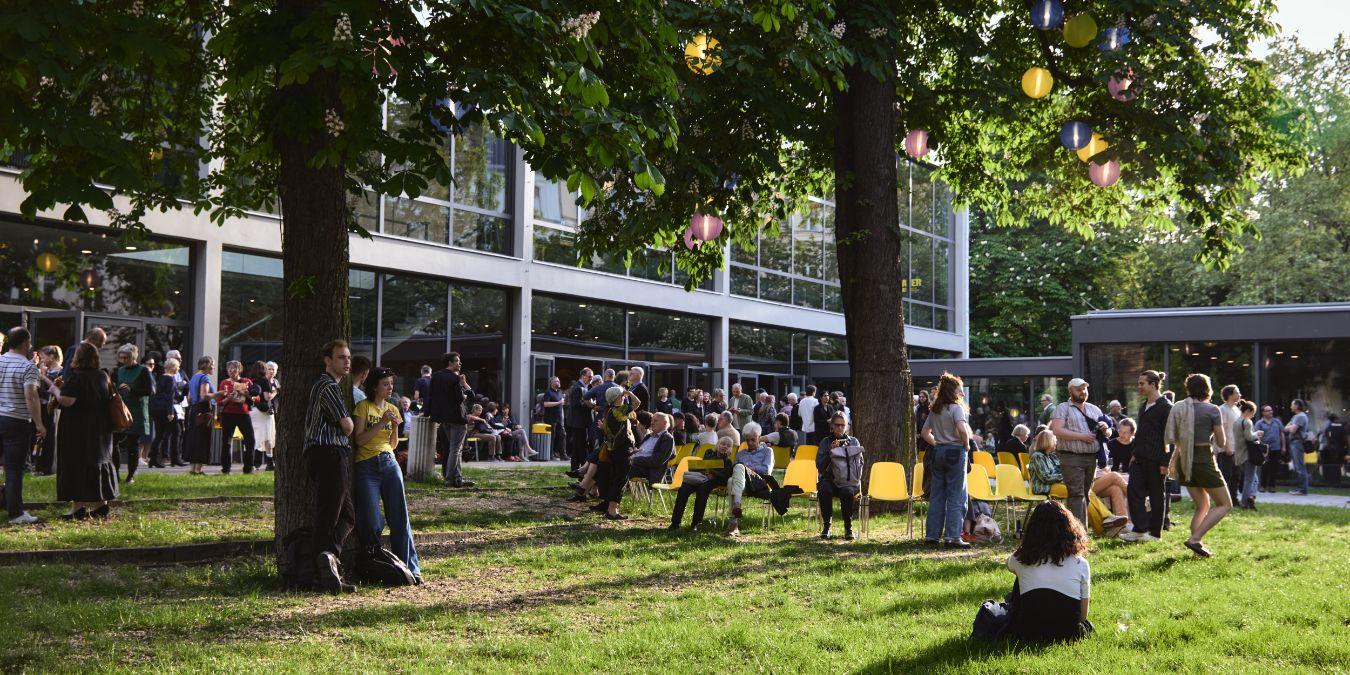
Opening of the Theatertreffen 2024 © Berliner Festspiele, photo: Fabian Schellhorn
About Berliner Festspiele
The Berliner Festspiele organise a range of festivals and art exhibitions, concerts, dance and theatre performances, readings, lectures, debates and much more throughout the year. These events are presented at a range of locations across Berlin but are concentrated primarily at their own two venues: the Gropius Bau and the Haus der Berliner Festspiele.
With their diverse range of provision in each artistic discipline, the Berliner Festspiele aim to be a major platform: For artists, their unique works and most varied approaches and working methods. For visitors, audiences and spectators from every single part of the city and the state, with their often deeply contrasting inclinations and expectations. And for the shared exploration of issues both timeless and timely that concern us all one way or another – and which represent greater challenges than ever for us as individuals and as a society, both here and all over the world.
It is often art that creates new spaces for our fantasy and imagination that reveal other possible realities, connections we were unaware of or ways to come to terms with or even overcome conflicts and oppositions. To be able to participate in these artistic processes and make them your own, to test your own points of view and to try out positions and ways of looking at things is the promise that the Berliner Festspiele will consistently offer to their public.
In their 75th anniversary year, the Berliner Festspiele will not only examine how their development has been filled with tradition and transformation and their enduring connections with post-war history in Germany and Europe, but they will also look forward and consider the radical cultural and geopolitical shifts of the present day. With special programmes in the Haus der Berliner Festspiele, the Gropius Bau and on Berlin’s Ringbahn the Berliner Festspiele will create spaces and living locations for artistic excellence and innovative formats, for polyphonic dialogue with the world and new possibilities for co-existence.
Since 2002 the Berliner Festspiele have been a cultural institution belonging to the German Federal Government. Together with their two “siblings”, the Berlinale and the Haus der Kulturen der Welt, they make up the organisation Kulturveranstaltungen des Bundes in Berlin GmbH.
The Berliner Festspiele’s Programme
In 2026 the Berliner Festspiele celebrate their 75th anniversary. A selection of events programmed throughout the entire year take the anniversary as their theme or mark the occasion with works at the Haus der Berliner Festspiele, the Gropius Bau, the Philharmonie Berlin, on Berlin’s Ringbahn and at other locations in the city.
The Gropius Bau on the border between Kreuzberg and Mitte is one of the largest exhibition venues in Germany. It frequently presents several exhibitions running simultaneously that can all be viewed with a single ticket. The atrium at the centre of the building is open to everyone free of charge and not only offers exciting art installations and performances, but is also a popular place to meet people and hang out.
The Haus der Berliner Festspiele lies on the border between Wilmersdorf and Charlottenburg and is a 1,000-seat theatre, the former Theater der Freien Volksbühne. This is where MaerzMusik, a festival for new and contemporary music, is held every spring, along with the Theatertreffen, that presents ten outstanding productions from the German-speaking region together with an additional programme every May, and the Theatertreffen der Jugend, which is one of our four national contests, the Treffen junge Szene.
The festival Tanz im August is a regular guest at the Haus der Berliner Festspiele every August, followed in September by the international literature festival berlin. Also in August and September, the Berliner Festspiele – in co-operation with the Berliner Philharmoniker Foundation – present Musikfest Berlin at the Philharmonie Berlin. As part of our programme series Reflexes & Reflections, we also negotiate social problems and contentious issues in August. Furthermore the artistic project What If Berlin offers “guided tours” of the 27 S-Bahn stations on the Ring in August and September.
During the autumn and winter, a series of prestigious, large-scale international dance and theatre productions as part of the Performing Arts Season can be seen at the Haus der Berliner Festspiele. And the three other events that make up the Treffen junge Szene are also held here: the Tanztreffen der Jugend, the Treffen junger Autor*innen and the Treffen junge Musikszene. In November it is time for Jazzfest Berlin. And in February the BerlinInternational Film Festival (Berlinale) is our guest.