Concert / Performance
Kanze Noh Theater
Kiyokazu Kanze, XXVI. Grand Master of the Kanze School
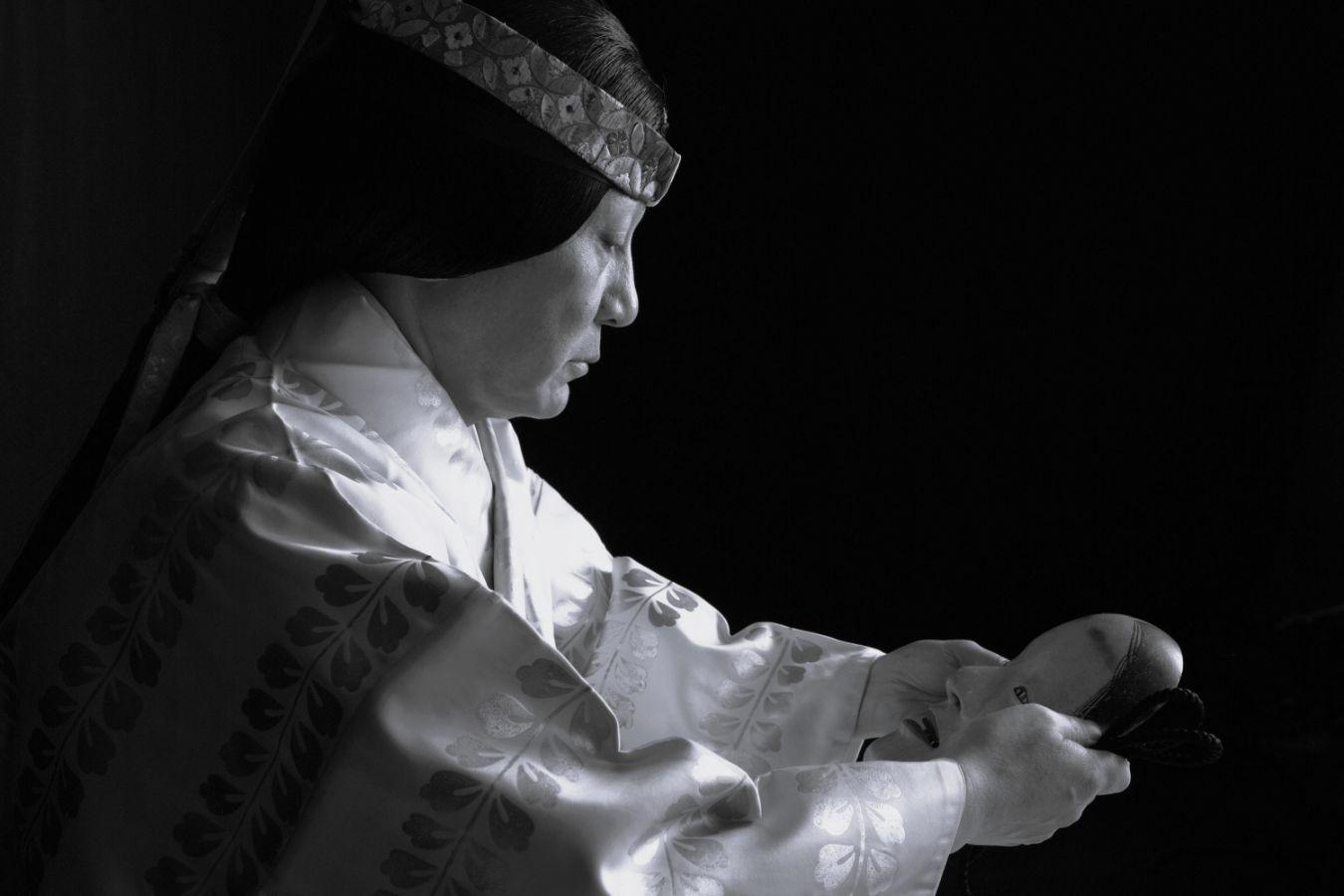
Kiyokazu Kanze, 26th Grand Master of the Kanze School © Yoshikatsu Hayashi
As part of its 2026 European tour, the ensemble of the Kanze Noh Theater from Tokyo will visit Musikfest Berlin. Featuring Kiyokazu Kanze – the 26th Grand Master of the Kanze School – as its lead actor, the company will present three works of classical Noh theatre. The traditional Japanese theatre form was created around 700 years ago and is regarded as one of the oldest in the world. With its visual language, its sense of sound and its (musical) dramaturgy, Noh theatre has had a strong influence on European contemporary music. Its distinctive features include deliberately minimal means of expression, the use of masks and highly formalised physical movements. On the following day, Kiyokazu Kanze will offer unique insights into the world of Noh theatre as part of an education event reserved especially for children and young people.
At the Philharmonie Berlin the ensemble of the Kanze Noh Theater presents the two Noh dramas Hagoromo and Shakkyō along with the Kyōgen comedy Kaki Yamabushi.
Hagoromo (The Robe of Feathers) is famous for its graceful dance, which will be performed at Musikfest Berlin by Grand Master Kiyokazu Kanze. The work is an adaptation of the legend Hagoromo Densetsu, whose origins can be traced back to the 8th century and which demonstrates clear parallels to the “swan maiden” saga known in Europe. Kaki Yamabushi (The Persimmon Thief) is one of the most frequently performed Japanese Kyōgen comedies. Kyōgen is another traditional Japanese theatre form and arose together with Noh in the course of the 14th century. The cheerful, often burlesque tone of Kyōgen plays forms a deliberate contrast to the serious themes of Noh dramas. Kyōgen plays are performed as short, independent interludes between two Noh works. Shakkyō (The Stone Bridge) is a famous celebratory Noh play that is particularly well known for its spectacular lion dance. The play is often performed to conclude a Noh programme, and often only the second part of it – the lion dance itself – is presented (Han-Noh or half-Noh).
The guest performance by the Kanze Noh Theater from Tokyo at Musikfest Berlin 2026 takes place as part of the Berliner Festspiele’s anniversary year. An engagement with traditional Japanese culture and its forms of expression has been part of the institution’s 75-year history. In 1985 the Berliner Festspiele’s Horizonte festival, dedicated to cultures from outside Europe, presented the forms and diversity of Japanese theatre, and in 1991 the Théâtre du Soleil from Paris integrated elements of East Asian theatre arts into its guest performance. The main theme of the Berliner Festwochen, the festival that preceded Musikfest Berlin, for 1993 was “Japan and Europa”, and two Noh theatre performances formed a significant section of the programme. Most recently the ensemble of the Umewaka Kennōkai Foundation from Tokyo gave a guest performance at the Philharmonie Berlin as part of Musikfest Berlin 2019.
This event is part of Focus Japan initiated by Berliner Festspiele.
 |
Programme
Hagoromo
(The Robe of Feathers)
Dramatic Noh play
(anonymous, ca. 14th/15th century)
Kaki Yamabushi
(The Persimmon Thief)
Kyōgen comedy
(anonymous, ca. 14th/15th century)
Shakkyō
(The Stone Bridge)
Dramatic Noh play in shortened form (Han-Noh)
(anonymous, ca. 14th/15th century)
Contributors
Kanze Noh Theater – ensemble
Kiyokazu Kanze, XXVI. grand master of the Kanze School – main performer
A guest performance as part of the 2026 European tour (Berlin – Munich – Brussels – Cologne) and a joint initiative of the Berliner Festspiele / Musikfest Berlin, the Japanese-German Center Berlin, musica viva of Bayerischer Rundfunk, Bozar – Centre for Fine Arts, Brussels, the Kölner Philharmonie / KölnMusik GmbH and the Japan Cultural Institute in Cologne / The Japan Foundation
With kind support of the Agency for Cultural Affairs, Government of Japan | Japan Arts Council; Arts Council Tokyo (Creation Grant); and the Tokyo Club
A Berliner Festspiele / Musikfest Berlin event in cooperation with the Japanese-German Center Berlin