

© Gerard Collett
Jennifer Johnston
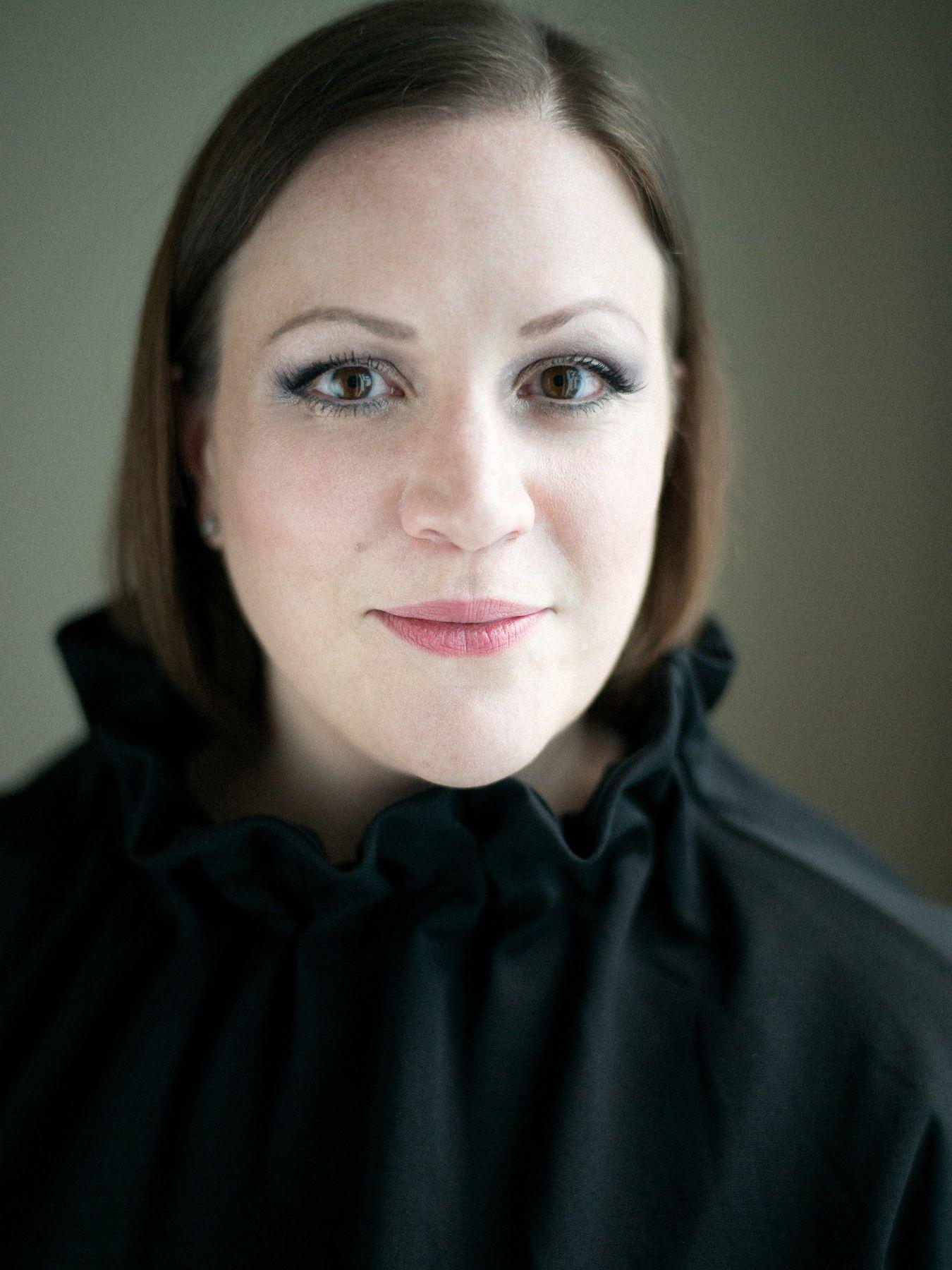
Widely regarded as one of Britain’s most commanding vocal talents, mezzo-soprano Jennifer Johnston has carved out a distinguished career as a consummate interpreter of the monumental works of Mahler, Wagner, Britten, Beethoven, and Elgar, making her the soloist of choice for many of the world’s foremost orchestras and conductors. In 2021, Johnston was awarded the Royal Philharmonic Society’s Singer Award, honouring her “commitment and emotional force” in both performance and education and, beyond the stage, she is a passionate and articulate advocate for the Arts.
Jennifer Johnston’s 2025/26 season was marked by several significant role debuts, nota-bly Ježibaba (Rusalka) which she sings both in Tatjana Gürbaca’s production for Den Norske Opera under the baton of Edward Gardner and with Royal Liverpool Philharmonic Orchestra under Domingo Hindoyan, and Fricka in Das Rheingold and Die Walküre with Sinfonieorchester Wuppertal under Patrick Hahn. She returns to her acclaimed interpretation of Judith in Blue-beard’s Castle with BBC Philharmonic Orchestra under Anja Bihlmaier.
On the concert stage this season, Johnston brings her signature depth and artistry to Mahler Symphony No. 3 with Taiwan Philharmonic and Jun Märkl, and Symphony No. 2 with the Antwerp Symphony Orchestra under Osmo Vänskä. She performs Wagner Wesendonck-Lieder with Bournemouth Symphony Orchestra and David Hill, and Mendelssohn Elijah with Gulbenkian Orchestra under Hannu Lintu. A passionate advocate for song and programme curation, she unveils two new programmes this season: The Age of Hollywood at London’s Cadogan Hall with Julius Drake, and Lost in the Stars at Wigmore Hall with Malcolm Martineau.
Mahler’s works have been a central feature of Johnston’s career, with key performances including his Symphony No. 8 with Royal Concertgebouw Orchestra under Klaus Mäkelä, Wiener Philharmoniker under Franz Welser-Möst, Bayerisches Staatsorchester under Kirill Petrenko, and with Semyon Bychkov conducting both NDR Radio Philharmonic Orchestra and Prague Philharmonic Orchestra; Symphony No. 3 with Cleveland Orchestra under Mäkelä and with Royal Liverpool Philharmonic Orchestra under Domingo Hindoyan and Symphony No. 2 with Philharmonia Orchestra under Santtu-Matias Rouvali (released on disc). In huge demand on the concert platform, other notable repertoire includes Judith (Bluebeard’s Castle) with Oslo Filharmonien under Mäkelä, Ravel Schéhérazade with BBC Symphony Orchestra under Sakari Oramo, Jocasta (Oedipus Rex) under Sir John Eliot Gardiner with Berliner Philharmoniker, Wagner Wesendonck-Lieder with Hallé Orchestra under Madaras, Verdi Messa da Requiem with BBC Symphony Orchestra and Oramo as part of the First Night of the BBC Proms, Schumann Faustszenen with Daniel Harding and Gewandhausorchester, and Britten Phaedra with Martyn Brabbins and Royal Liverpool Philharmonic Orchestra.
Jennifer Johnston has enjoyed a close collaboration with Bayerische Staatsoper, where she has sung over 80 performances including as Brigitta (Die tote Stadt), Mrs Sedley (Peter Grimes), Second Norn (Götterdämmerung), Roßweise (Die Walküre), Floßhilde (Das Rheingold and Götterdämmerung), Hedwige (Guillaume Tell) and La Ciesca (Gianni Schicci). Highlights elsewhere have included Johnston’s critically acclaimed Judith (Bluebeard’s Castle) for English National Opera, Juno (Semele) for Glyndebourne Festival Opera, Mrs Grose (The Turn of the Screw) and Gaia (Battistelli’s CO2) at Teatro alla Scala, Carmi (Mozart’s La Betulia Liberata) and Leda (Die Liebe der Danae) at Salzburg Festival, and Dido (Dido and Aeneas) at Festival d’Aix-en-Provence.
A former BBC New Generation Artist, and a graduate of Cambridge University and the Royal College of Music, Johnston has an extensive discography including her first solo recording, A Love Letter to Liverpool (Rubicon Classics), the Grammy-nominated Vaughan Williams’s Four Last Songs (Albion Records), Stravinsky’s Oedipus Rex (LSO Live), Wagner’s Die Walküre (Waltraute) with Sir Simon Rattle and Bayerischer Rundfunk Orchester and, Gramophone Awards’ 2022 Recording of the Year, Korngold’s Die tote Stadt from Bayerische Staatsoper.
As of: April 2026