Concert
Orchester der Deutschen Oper Berlin
Titus Engel, conductor
Stockhausen / Cage / Wagner
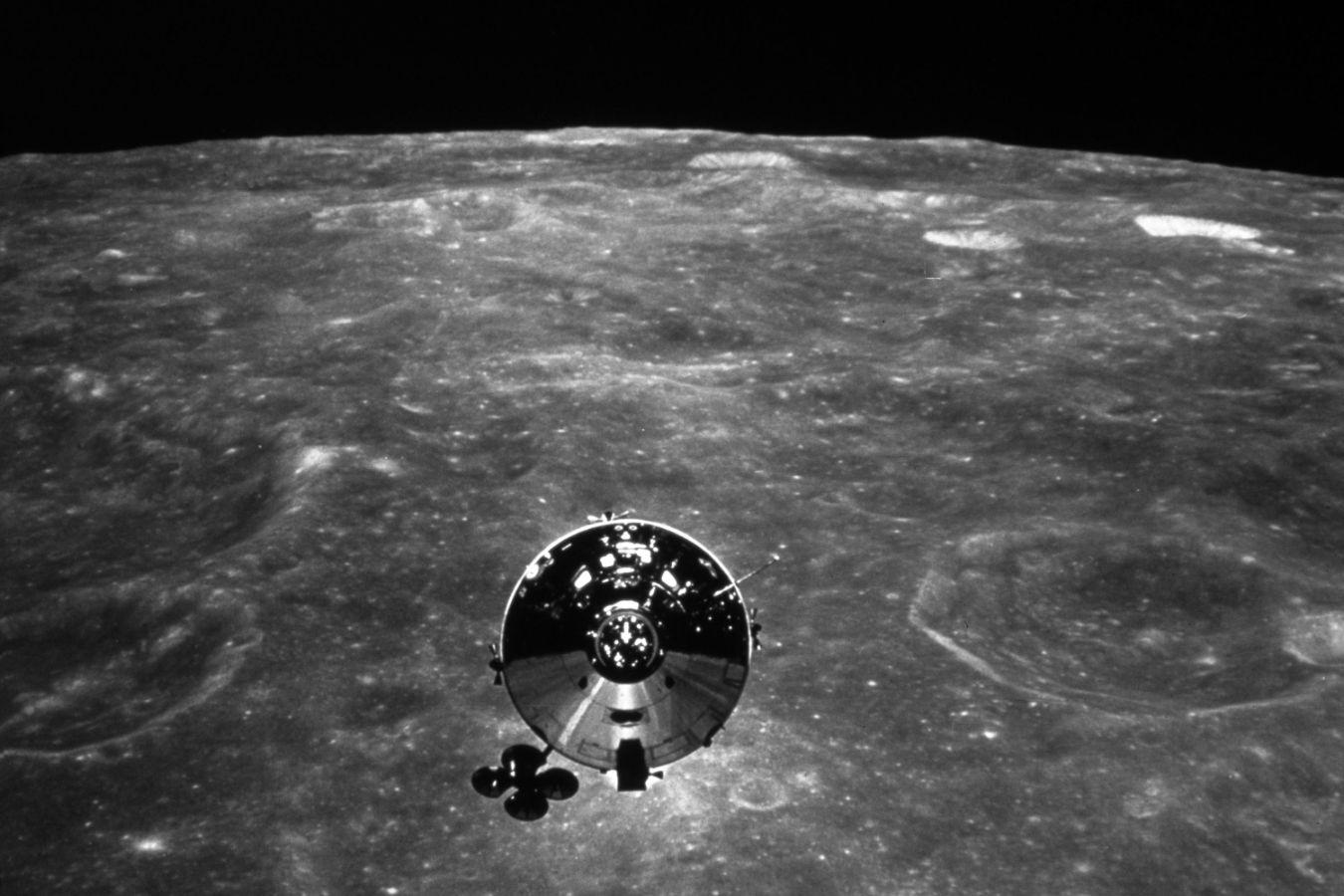
Apollo 10 orbits the Moon, 1969 © akg-images
Only a few days before the premiere of the opera Mittwoch aus Licht, Titus Engel devotes himself in his first concert as conductor in residence with the Orchestra of the Deutsche Oper Berlin to a scene from another day of Karlheinz Stockhausen’s week-long opera cycle – the second act of Donnerstag aus Licht. The purely instrumental section Michaels Reise um die Erde depicts the travels of a hero culminating in an ascension to heaven. There are clear parallels here to the journey of Parsifal which was profoundly characterised by Richard Wagner’s affinity with religious spirituality, and the evening concludes with extracts from this work. John Cage’s 4′33″, a composition that reoriented and challenged listening habits through the discovery of musical rests as sonic space, acts as a connecting element between these works, attuning the ear to a quasi-sacred atmosphere.
Karlheinz Stockhausen is considered as the inventor of pointillist music and moment form. The major representative of serialism was a pioneer of aleatoric and electronic music and also of abstract spatial composition. He acted as an unparalleled primary influence within the sphere of European post-war modernism, viewing the “zero hour” after the destruction during World War II as a historic opportunity for a radical new beginning. In his opera cycle Licht (Light), composed between 1977 and 2003 with the seven segments corresponding to the seven days of the week, he created a syncretic world theatre of creation with a total duration of around 29 hours, revolving around the archangel Michael, his adversary Lucifer and the ‘maid of the stars’ Eva in a monumental Gesamtkunstwerk of superlatives. The solo trumpet in Michaels Reise um die Erde represents the protagonist during a symbolic excursion into his own ego in which the music is a stylistic recreation of its individual stages (including Japan, Bali, India and central Africa). In Jerusalem, Michael finally encounters Eva with whom he becomes musically amalgamated in a “dense trill” (Stockhausen) in Himmelfahrt. Richard Wagner also manifested the profound dimensions of religion and ritual sublimity in Parsifal: extracts from this work are performed in the second half of the concert. Beyond the confines of Christian symbolism, a wide variety of different religious traditions are also blended in this Bühnenweihfestspiel [stage consecration festival play] (Wagner) – including the spirituality of nature and Buddhist and Schopenhauerian concepts. Between these two works which today are still shrouded in a nimbus of mysticism, we hear a key work of contemporary music – John Cage’s 4′33″ – in which the composer created a fascinating exercise in attentive listening under the influence of Zen Buddhism. The concertante performance of Michaels Reise um die Erde provides the curtain-raiser for Deutsche Oper Berlin’s thematic focus on Stockhausen und Cage co-curated by Titus Engel.
Programme
Karlheinz Stockhausen (1928–2007)
Michaels Reise um die Erde (1978)
Act 2 of Donnerstag aus Licht
Opera in three acts, a greeting and a farewell
Concert performance
John Cage (1912–1992)
4′33″ (1952)
Richard Wagner (1813–1883)
Parsifal (1865–82)
Excerpts from the 3rd act of the Bühnenweihfestspiel
Concert performance
Contributors
Attilio Glaser – tenor (Parsifal)
Tareq Nazmi – bass (Gurnemanz)
Paul Hübner – solo trumpet
Paula Breland – solo basset horn
Orchester der Deutschen Oper Berlin
Titus Engel – musical direction
Paul Jeukendrup – sound direction
An event by Deutsche Oper Berlin in cooperation with Berliner Festspiele / Musikfest Berlin