Concert
RIAS Kammerchor Berlin II / Deutsches Symphonie-Orchester Berlin II
Justin Doyle, conductor
Duruflé / Schnittke
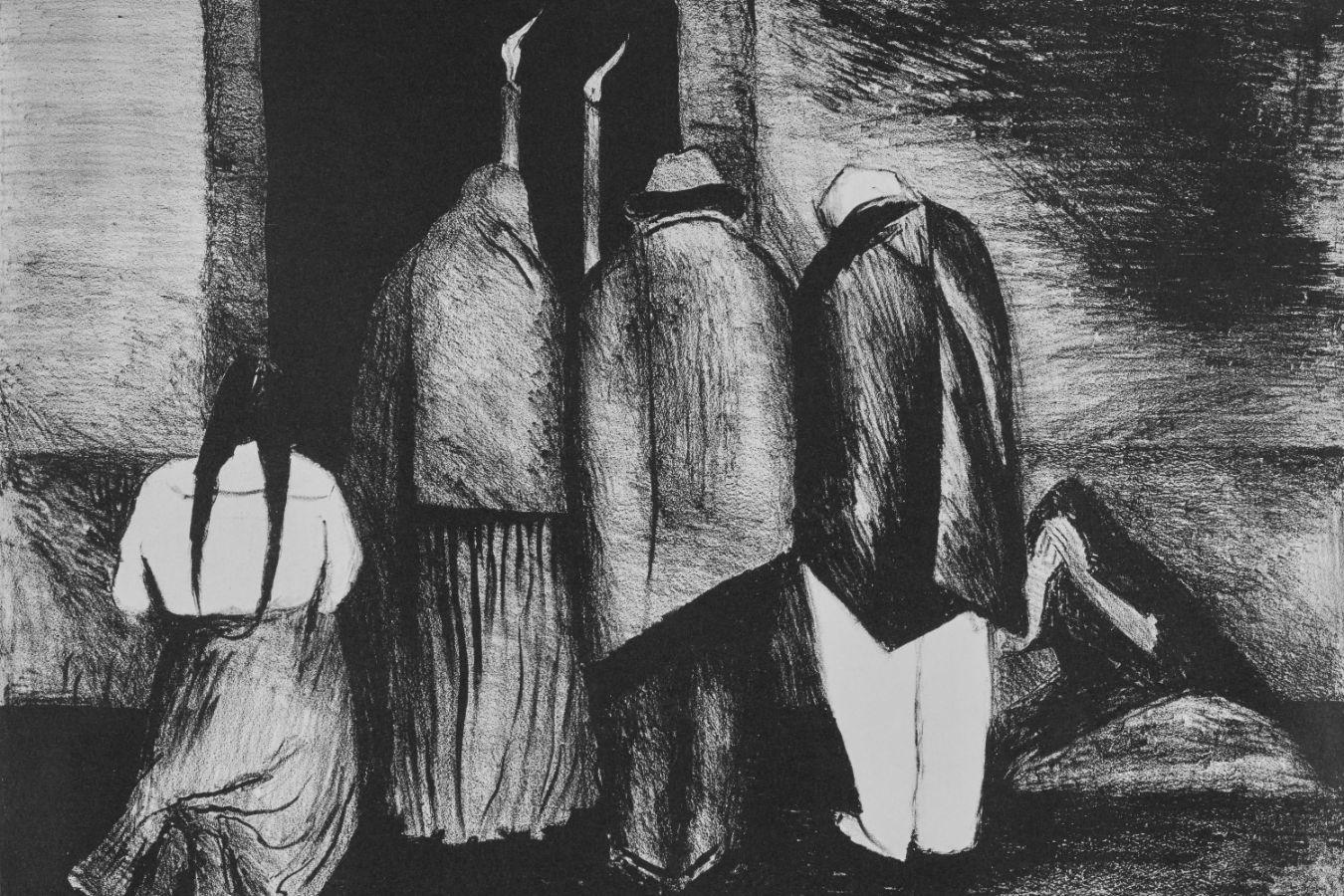
El Requiem, Jose Clemente Orozco, 1928 © Heritage Images / akg-images / Heritage Art
Maurice Duruflé’s ethereal Requiem blends allusions to Gregorian chant with an enchanting play of timbres whose delicate musical texture is reminiscent of the skilled instrumentation of Claude Debussy and Maurice Ravel. This all comes together to form a paradisiacal vision of heaven presented by the RIAS Kammerchor Berlin, Deutsches Symphonie-Orchester Berlin and conductor Justin Doyle at the Musikfest Berlin. The second half of the programme features Alfred Schnittke’s Requiem, a polystylistic fresco of sound, oscillating between humanism and the force of spiritual faith. Unlike many of the famous masses for the dead, the work largely dispenses with dramatic contrasts: the choir does not rejoice in glowing terms over God’s greatness but meditates quietly on the words it sings in lines that sound improvised.
Maurice Duruflé commented that he had composed the Requiem on “the basis of Gregorian themes from the funeral mass […]. In certain places, the musical text has been adopted in full and the orchestral part provides support and a commentary; in other places, I have merely allowed myself to be inspired by this music.” At the same time, the French composer dispensed with the drama of the Dies irae and focused in his impressionistic and shimmering orchestral colouring on angels with their “heavenly” harps and the depiction of Paradise illustrated by the sounds of the celesta and organ.
Alfred Schnittke also created an overtly introverted setting of the timeless funeral mass text, although the score shows no sign of impressionistic tonal effects. Strangely enough, the composer developed the work out of incidental music for Friedrich Schiller’s Don Carlos while still based in the Soviet Union. This music was created in 1975 “in the form of a requiem” (Schnittke) for a production at the Moscow Mossovet Theatre which was to be performed against the background of Catholic ecclesiastical music. Echoing the deeply tragic plot of Schiller’s drama, this incidental music developed into an incomparable requiem setting – not merely due to its unusual orchestral forces which include organ, piano, celesta, vibraphone, bells, gong, flexatone, timpani, trumpet, trombone and two electric guitars. Tentative sections in piano and whispering choral passages in the style of a litany are juxtaposed by solo coloraturas and organ clusters built up stepwise throughout the fourteen movements in which the consistently spectral sounds of Schnittke’s polystylistic method are ever-present.
Programme
Maurice Duruflé (1902–1986)
Requiem op. 9 (1941–47)
for soloists, choir, organ and orchestra
Alfred Schnittke (1934–1998)
Requiem (1974/75)
for soloists, mixed choir and instruments
from the music to Friedrich Schiller’s drama Don Carlos
Contributors
Jennifer Johnston – mezzosoprano
Soloists of the RIAS Kammerchor Berlin
Deutsches Symphonie-Orchester Berlin
Justin Doyle – conductor
An event by RIAS Kammerchor Berlin in cooperation with Deutsches Symphonie-Orchester Berlin and Berliner Festspiele / Musikfest Berlin