
Annual Preview 2026
After an eventful 2025 – with exhibitions by Diane Arbus, Vaginal Davis, Ligia Lewis and Yoko Ono, the launch of our free monthly event series Spätschicht, and the first anniversary of our admission-free children’s play space BAUBAU – we are delighted to announce our 2026 programme.
“Our 2026 programme is defined by artists who cast an uncompromising gaze on society and break boundaries. Leila Hekmat opens the programme in March with a new performance in the atrium. In the spring, Marina Abramović takes centre stage with Balkan Erotic Epic, an exhibition showcasing the artist’s iconic, ongoing exploration of the body, ritual, eroticism and death. Eroticism and death – along with queer love – are also central to the œuvre of Peter Hujar, whose work is presented in dialogue with photographs by Liz Deschenes. Later in the year, we reflect on Germany’s history and present from a wide range of artistic perspectives, with solo exhibitions by Gabriele Stötzer and Christoph Schlingensief, as well as the group show Kreuzberg. This country’s stark social and cultural contrasts have prompted each of the exhibiting artists to explore alternative models for society through their work: Schlingensief blurred the line between political activism, performance and visual art, much as did Stötzer, who has used her body as a site of political action since the 1970s. In turn, the exhibition Kreuzberg brings together artists who engage with the topic of labour migration, drawing a connection to our current moment through works that address the ongoing struggles for inclusion and equality.”
— Jenny Schlenzka, Director, Gropius Bau
LeilaHekmat: Roses Rising – The Movement
6 and 7 March 2026
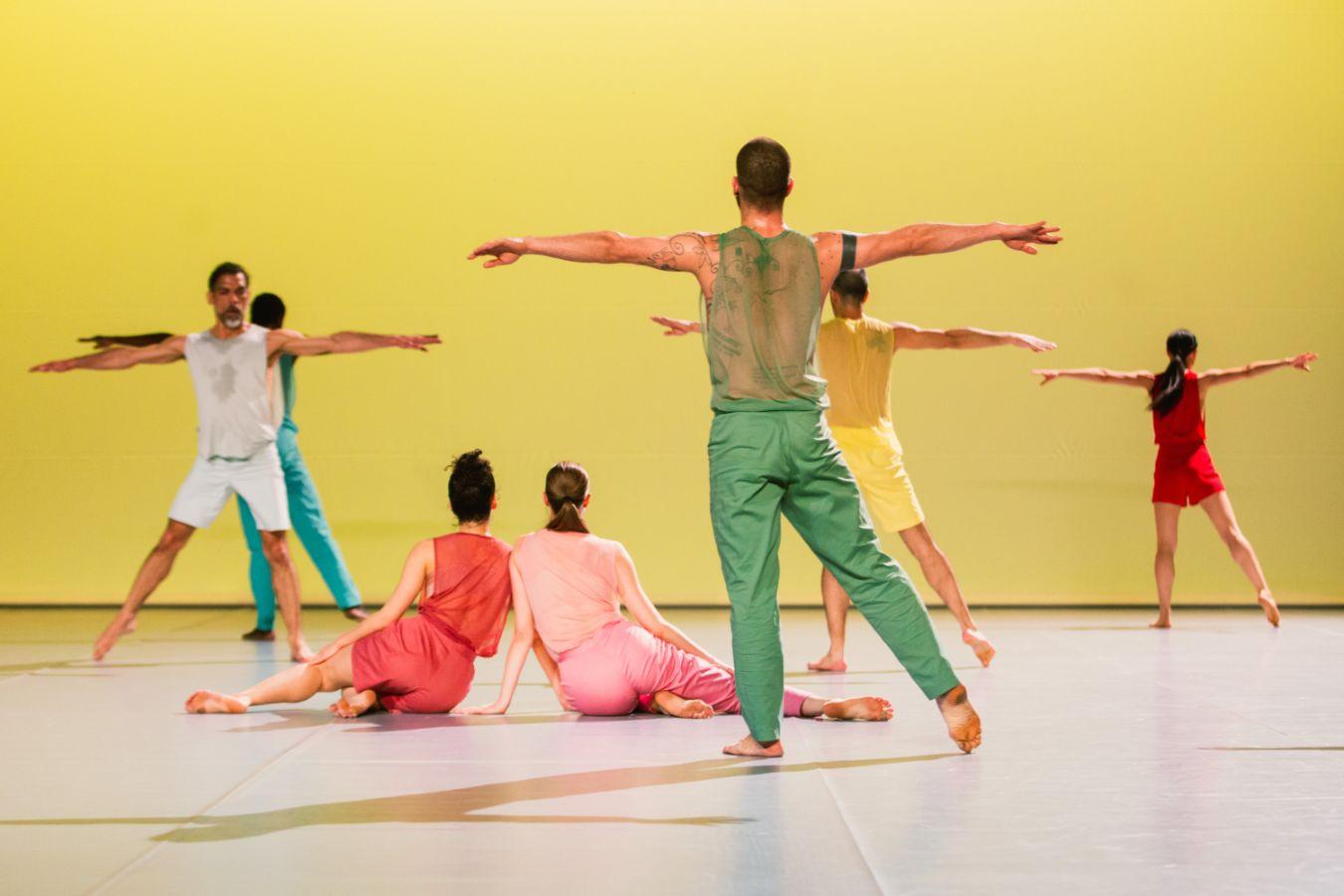
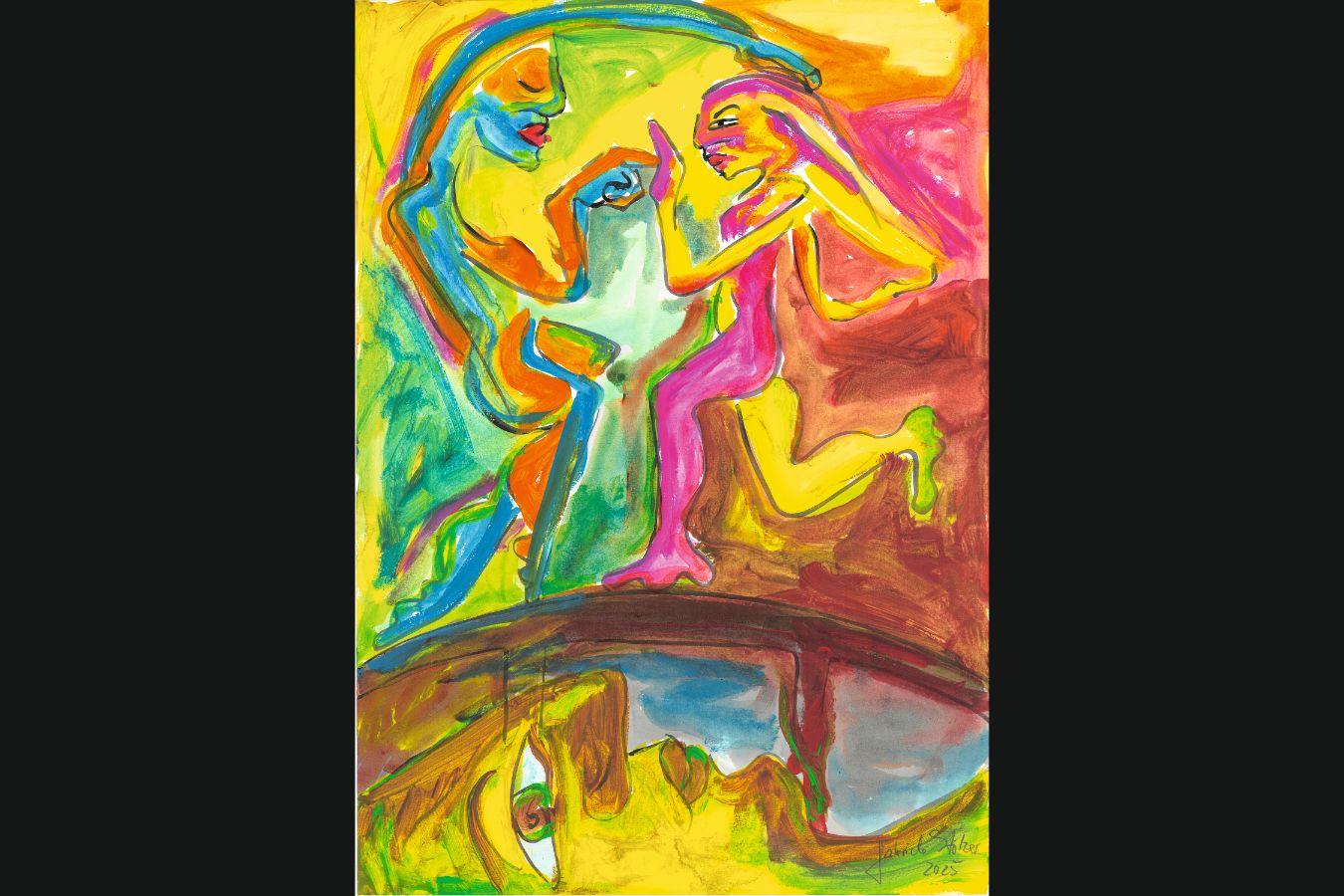
How does the bourgeois longing for revolt take shape, when the faith in progress and reason is unsettled? And how tightly entwined are self-interest and radical dissent? Berlin-based artist and director Leila Hekmat explores these questions in her newly commissioned performance Roses Rising – The Movement, premiering on 6 and 7 March in the Gropius Bau’s atrium. Moving between concert and ballet, the piece transforms the space into a landscape hovering between bunker, rehearsal room and dreamscape and invites the audience to witness a dinner party unravel into a happening.
With meticulously handcrafted costumes and stage designs, Roses Rising unfolds in Leila Hekmat’s distinctive style, traversing comedy, musical tableau vivant and performance. Developed through extensive research and collected materials on 1970s protest cultures, the work emerges as a performative collage that explores the conscious and unconscious strategies through which people respond to a world in crisis.
Roses Rising is presented in two parts in collaboration with HAU Hebbel am Ufer. After The Movement at Gropius Bau, the stage production The Dinner will premiere at HAU1 on 15 April 2026.
Roses Rising – The Movement is curated by Nora-Swantje Almes, Curator Live Programme and Outreach, with Alexandra Philippovskaya, Assistant Curator Live Programme and Outreach, and Edessa Malke, Curatorial Fellow Live Programme and Outreach
PeterHujar / Liz Deschenes: Persistence of Vision
19 March to 28 June 2026
Bringing together the works of Peter Hujar and Liz Deschenes, Persistence of Vision opens an intergenerational dialogue on photography. Working in New York City between the Stonewall uprising of 1969 and the onset of the AIDS crisis in the 1980s, Peter Hujar captured a pivotal cultural moment in piercing black-and-white photographs. Alongside incisive images of animals, nature and urban ruins, he portrayed New York’s downtown avant-garde and queer communities, including figures such as Candy Darling, Susan Sontag and David Wojnarowicz.
In the exhibition, Hujar’s photographs are interspersed with contemporary works by New York City-based artist Liz Deschenes. These interludes invite viewers to pause, slow down and consider Hujar’s work in a new light. Deschenes creates sculptures and non-representational photographic works that employ the fundamental properties of the medium – light, chemistry and time – to explore what a photograph can be. As the first major exhibition of both Hujar’s and Deschenes’ work in Berlin, Persistence of Vision proposes an expansive understanding of photography and highlights the uncompromising clarity of vision that defines both artists’ practices.
Curated by Eva Respini, Co-CEO and Curator at Large, Vancouver Art Gallery, with Monique Machicao y Priemer Ferrufino, Curatorial Fellow Exhibitions, Gropius Bau
In partnership with Gropius Bau, the Bundeskunsthalle in Bonn presents Peter Hujar. Eyes Open in the Dark from 27 February to 23 August 2026.
MarinaAbramović: Balkan Erotic Epic. The Exhibition
15 April to 23 August 2026
One of the most influential performance artists of all time, Marina Abramović presents Balkan Erotic Epic. The Exhibition at Gropius Bau in spring 2026. The show traces her ongoing engagement with ritual, eroticism, death and the body as a site of political resistance.
Women beat their chests and massage their breasts in lamentation, while a living naked body lies entwined with a skeleton: drawing on the folklore of Abramović’s native Balkans, the exhibition weaves together filmic and sculptural installations with live performance to explore eroticism as an offering that binds life and death, the self and the cosmos. It highlights the artist’s performances not merely as acts of personal endurance, but as imagined rituals that reposition the erotic body as carrier of spiritual, political and ecological meaning.
Celebrating their 75thanniversary, the Berliner Festspiele unfold Balkan Erotic Epic in two parts: following the exhibition at Gropius Bau, the new multi-hour theatre production Balkan Erotic Epic. The Stage Version will open the Performing Arts Season in the Haus der Berliner Festspiele in October 2026.
Curated by Agnes Gryczkowska, curator and musician, and Jenny Schlenzka, Director, Gropius Bau, with Elena Franziska Setzer, Assistant Curator, Gropius Bau, and Savannah Thümler, Curatorial Assistant, Gropius Bau
GabrieleStötzer: Dabei sein und nicht schweigen
19 June to 6 December 2026
For more than five decades, Gabriele Stötzer has been grappling with questions of justice, gender and self-determination. Her own body often plays a central role in her work – not as an object, but as a site of resistance and feminist self-assertion. Opening at Gropius Bau in June 2026, Dabei sein und nicht schweigen will be the artist’s largest institutional solo exhibition to date.
Stötzer’s artistic practice is inextricably linked to her social and political engagement. In 1976, she was detained for organising a petition, which the GDR authorities declared a “defamation of state.” Following a year-long imprisonment, she joined the literary and artistic underground and later co-founded the art collective Künstlerinnengruppe Erfurt. Many of her works formulate radical counter-concepts to state repression and control by pushing boundaries through experimentation and making space for vulnerability and desire. With around 150 works, the exhibition highlights the diversity of her œuvre – encompassing painting, literature, photography, textile art, Super 8 film, performance and public interventions – and intends to catalyse the long-overdue broader recognition of this groundbreaking artist.
Curated by Julia Grosse, Strategic Consulting and Conceptual Development, Gropius Bau, with Christopher Wierling, Assistant Curator, Gropius Bau
Gabriele Stötzer: Dabei sein und nicht schweigen is funded by the Kulturstiftung des Bundes (German Federal Cultural Foundation).
Kreuzberg(WT)
10 September 2026 to 17 January 2027
Nowhere were the social and cultural changes of 1960s and 1970s West Germany more powerfully manifest than in Berlin’s Kreuzberg neighbourhood. Here, the broader transformations reshaping life in the Federal Republic through labour recruitment agreements with countries including Italy, Greece, and Turkey became visible at the local scale. Opening in autumn 2026, the group exhibition Kreuzberg (working title) focuses on the diverse and largely overlooked cultural production on the topic of labour migration and on how artists in the neighbourhood have responded to the tensions and issues of their time.
Gropius Bau, located in Kreuzberg, presents more than 100 works in film, painting, photography, installation and performance that centre the lived realities of labour migrants and their descendants, exploring the struggles for inclusion and equality still being fought today. Featuring both historical and contemporary works by artists including Vlassis Caniaris, Azade Köker, Nuray Demir and Monika Sieveking, the exhibition demonstrates the international significance of Kreuzberg’s cultural production.
Curated by Gürsoy Doğtaş, art historian and Creative Mediator, Manifesta 16, and Patrizia Dander, Deputy Director of Curatorial Affairs, Gropius Bau, with Sonja Borstner and Elena Franziska Setzer, Assistant Curators, Gropius Bau
On the occasion of Kreuzberg, the Stadtmuseum Berlin presents the exhibition Geteiltes Leben at the Museum Ephraim-Palais from 11 September 2026 to 7 February 2027.
Kreuzberg is funded by the Kulturstiftung des Bundes (German Federal Cultural Foundation).
ChristophSchlingensief: ES IST NICHT MEHR MEIN PROBLEM, MACHT EURE SCHEISSE ALLEINE (WT)
9 October 2026 to 17 January 2027
Over the course of his artistic career, Christoph Schlingensief relentlessly confronted the absurdities of the present. In autumn 2026, Gropius Bau presents his visionary work with ES IST NICHT MEHR MEIN PROBLEM, MACHT EURE SCHEISSE ALLEINE (working title), an exhibition that spans the range of his œuvre from sensational political actions to radical stage productions and the coalescence of performance and visual art. The exhibition is not a retrospective in the classic sense of the word; instead, it brings Schlingensief’s central bodies of work into conversation, highlighting the ways in which his artistic strategies permeated one another and constantly challenged audiences to take active positions. Thus, in the artist’s first comprehensive exhibition in Berlin in more than a decade, the focus is not on the completed work, but on the process of questioning, doubting and failing that characterised his practice. As Schlingensief himself put it, “One can fail with enthusiasm, joy and intent. […] Much will happen if one manages to accept that failure is necessary to harnessing strength.”
Curated by Raphael Gygax, curator, in collaboration with Aino Laberenz, Christoph Schlingensief Estate, with Christopher Wierling, Assistant Curator, Gropius Bau
Spätschicht
Spätschicht – Live Programme at Gropius Bau is a monthly series of free events with an interdisciplinary programme ranging from talks, book discussions and film screenings to concerts and DJ sets. Each edition of the event series is co-curated with an institution, collective or artist. Sometimes loud, sometimes quiet, experimental and always open to clashing – a space to discover new things and shift perspectives.
8.1.2026 Spätschicht x Schwules Museum
26.3.2026 Spätschicht x C/O Berlin
Further editions on 4.6., 2.7., 6.8., and 1.10.2026.
BAUBAU
A Play Space for Kids With colourful wallpapers, dinosaurs, fantastical beings and abstract elements, artist Kerstin Brätsch has created a free play space for kids: BAUBAU. As a permanent part of Gropius Bau, it invites children to play, laugh, make noise or simply do nothing – because here, more is allowed than forbidden. In this way, BAUBAU playfully questions the nature of a museum or art institution.
Press Conference 2026
We cordially invite you to the annual press conference of the Berliner Festspiele with Gropius Bau on 26 February 2026 at 11:00 in the Haus der Berliner Festspiele.
RSVP: Please register via presse@berlinerfestspiele.de.