
Theatre
Pueden dejar lo que quieran
Fernando Rubio
A play with the texture of memory
European premiere
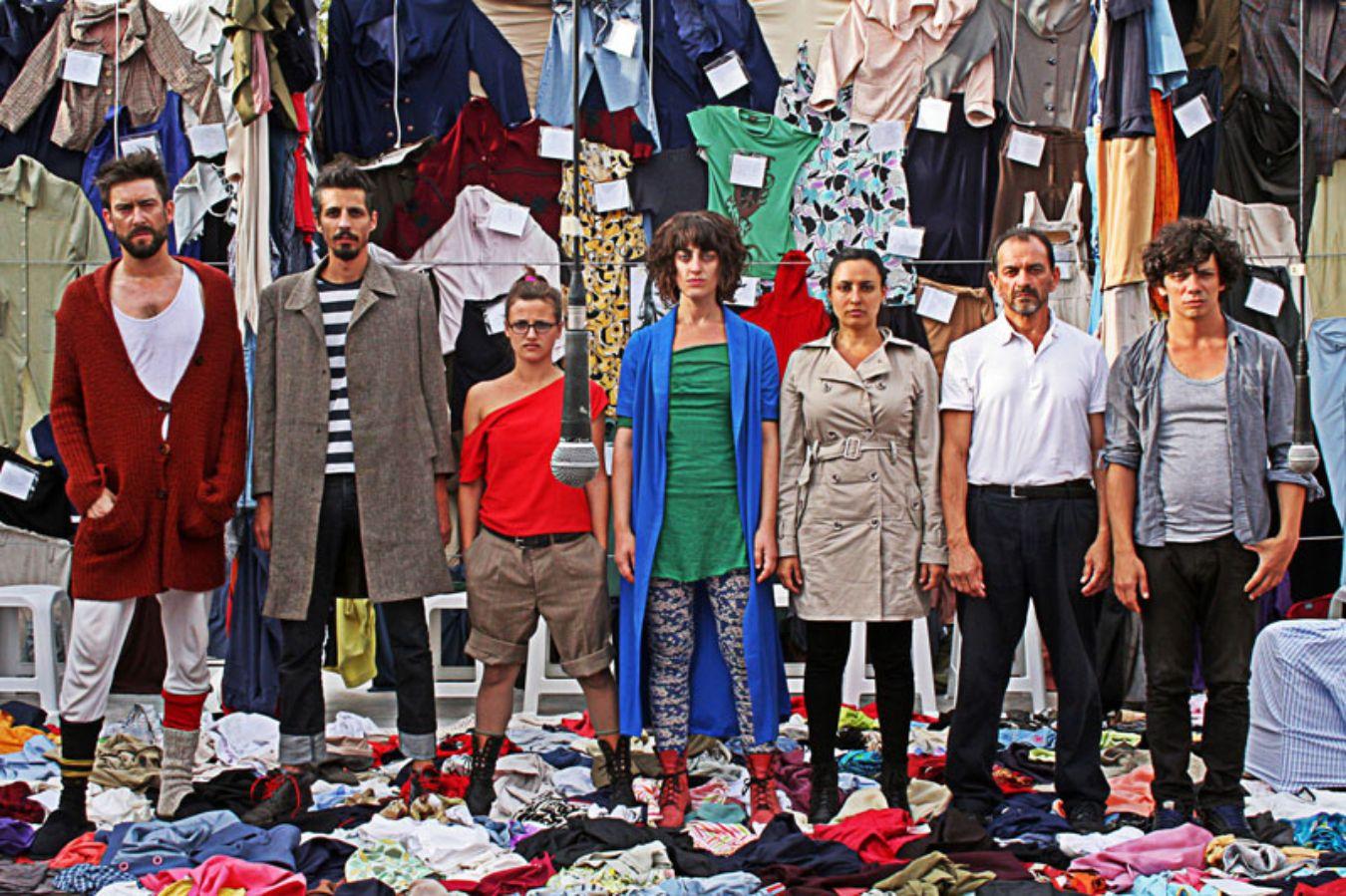
Pueden dejar lo que quieran © Santiago Pianca
A room full of used clothing. Masses of jackets, trousers, skirts and coats cover the floor, rows of seats and walls, their corporeality bearing witness to the wearers who are no longer present. Who wore them and what has happened to them? These are questions that are particularly urgent in Argentina’s post-dictatorial society. The small notes pinned on the clothes narrate stories from former lives: a child’s dress tells of a father’s return to Buenos Aires in 1983. A cardigan is reminiscent of the laugh the person had who wore it. This textile memory box becomes the stage setting for the story of how a man lost his family in a car accident. To keep his memories alive, he writes on their clothes. Seven actors tell his stories; either together, or separately, by pulling the curtains – made of clothing – around them to create intimate spaces, in which the garments seem to be listening. In “Pueden dejar lo que quieran”, the visual artist and theatre-maker Fernando Rubio tries to provide physical access to historical and private moments using the objects left behind by those missing, reconstructing memory using clothes and their stories.
Author and director Fernando Rubio
Director assistant Florencia Carreras
Scenographer Santiago Rey
Music Pablo Dacal
Sound Fede Zypce
Voice Hartmut Becher
Production Manager Niko Vasilliadis
Production / international representation Marion Ecalle / KIBLOS SARL
Graphic design / photography Santiago Pianca
With
Pablo Gasloli, Juliana Muras, Andrea Nussembaum, Lourdes Pingeon, Jorge Roberto Prado, Marcelo Subiotto and Martín Urruty
A creation of Fernando Rubio for INTIMOTEATROITINERANTE, in co-production with KIBLOS SARL, Fira Tàrrega, the Festival Internacional de Buenos Aires, the Spanish Cultural Centre in Buenos Aires and the Spanish Agency for International Development Cooperation “AECID”.
Funded by Goethe-Institut.