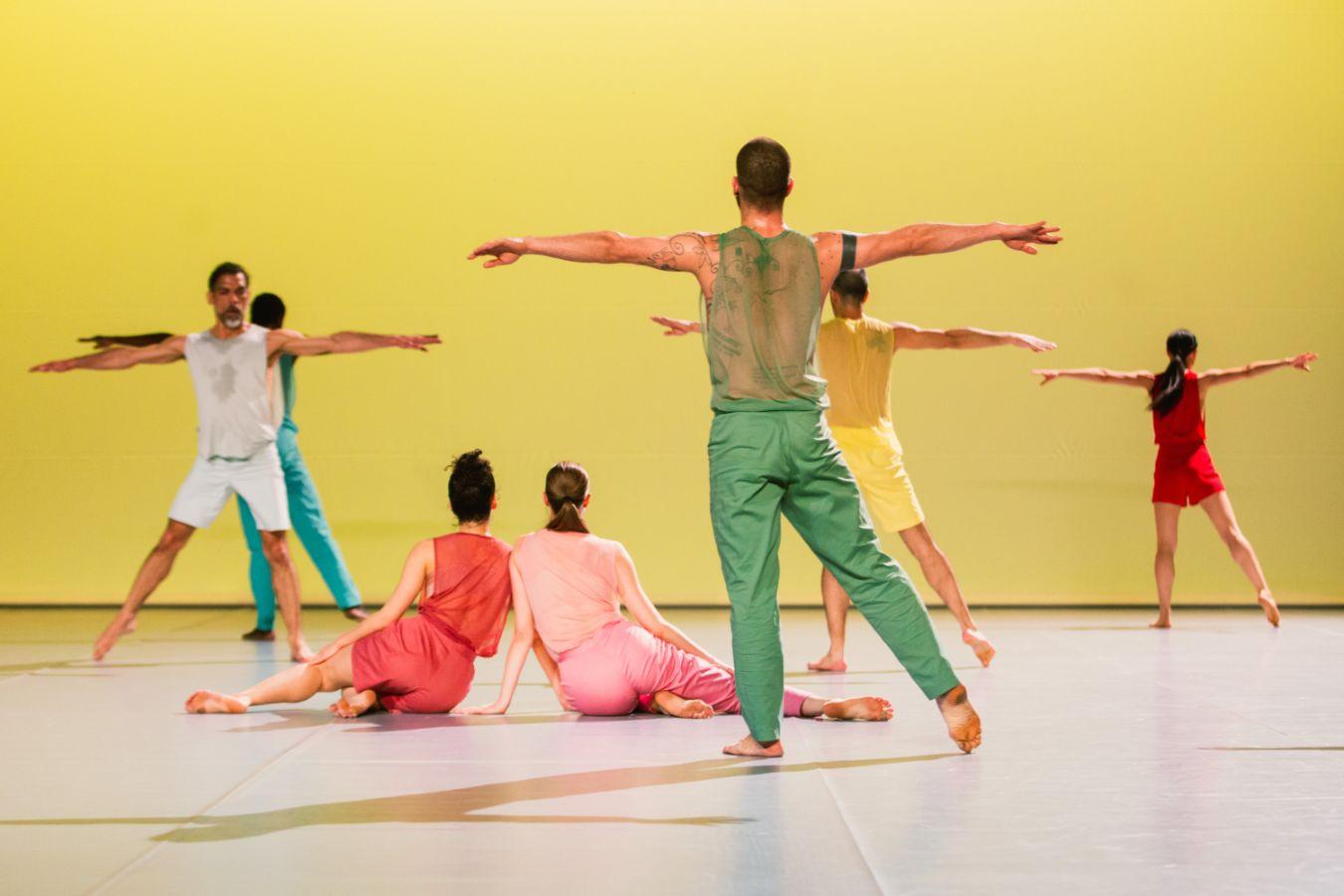
Focus Japan © Shiro Takatani / Dumb Type
Focus Japan
An Initiative of the Berliner Festspiele 2026/27
As part of their anniversary season, the Berliner Festspiele in partnership with the Japanese-German Center Berlin dedicate a special focus to performative and musical arts from Japan. Through contributions to the programmes of Musikfest Berlin, the Performing Arts Season, Jazzfest Berlin and MaerzMusik, alongside an original project unfolding across the city, this initiative draws on a long history of exchange and resonance between the Berliner Festspiele and artistic expressions of Japanese culture.
The works offer a layered manifestation of questions surrounding identity and community. Themes of tradition and origin emerge alike in the refined poetics of the Kanze Noh Theater and in the choreographically interpretated creation mythology of Japan evoked in Planet [wanderer] by Damien Jalet and Kohei Nawa.
Both Akira Takayama’s project What If Berlin, which explores archived visions of a “New Berlin” along Berlin’s S-Bahn ring, and the collective Dumb Type’s technologically driven, at times dystopian reflections in 2020 on human vulnerability address questions of how societies imagine the future and negotiate the possibility of shared perspectives. Correspondingly, the search for common ground finds its live expression in the improvisational dialogue of Otomo Yoshihide’s New Jazz Quintet.
The cooperation partner of the Berliner Festspiele for Focus Japan is the Volksbühne am Rosa-Luxemburg-Platz, with two new productions and one guest performance.
Venues: Haus der Berliner Festspiele, Philharmonie Berlin, Berlin S-Bahn ring, Volksbühne am Rosa-Luxemburg-Platz
 |
28 August to 20 September 2026 | Berlin S-Bahn ring
What If Berlin
The Ringbahn as a Stage for 27 Forgotten Visions of the Future
For the 75th anniversary, Japanese artist Akira Takayama invites the audience of the Berliner Festspiele to take a trip on Berlin’s Ringbahn. On four weekends he will organise “guided tours” of the 27 S-Bahn stations on the Ring, which he proposes to developing by realising a site-specific artistic project at each one. However, the ideas for these projects are not new, but have been found in the drawers of the Berliner Festwochen, the Berliner Festspiele, other Berlin cultural institutions and artists. Unrealised projects from the past will be presented on the Ringbahn by experienced tour guides – and thereby transposed to the present by Takayama, highlighting Berlin’s visible and invisible, old and new borders. At the end he will ask us which of the projects we actually want to see realised in the future – for the next Berlin, our New Berlin.
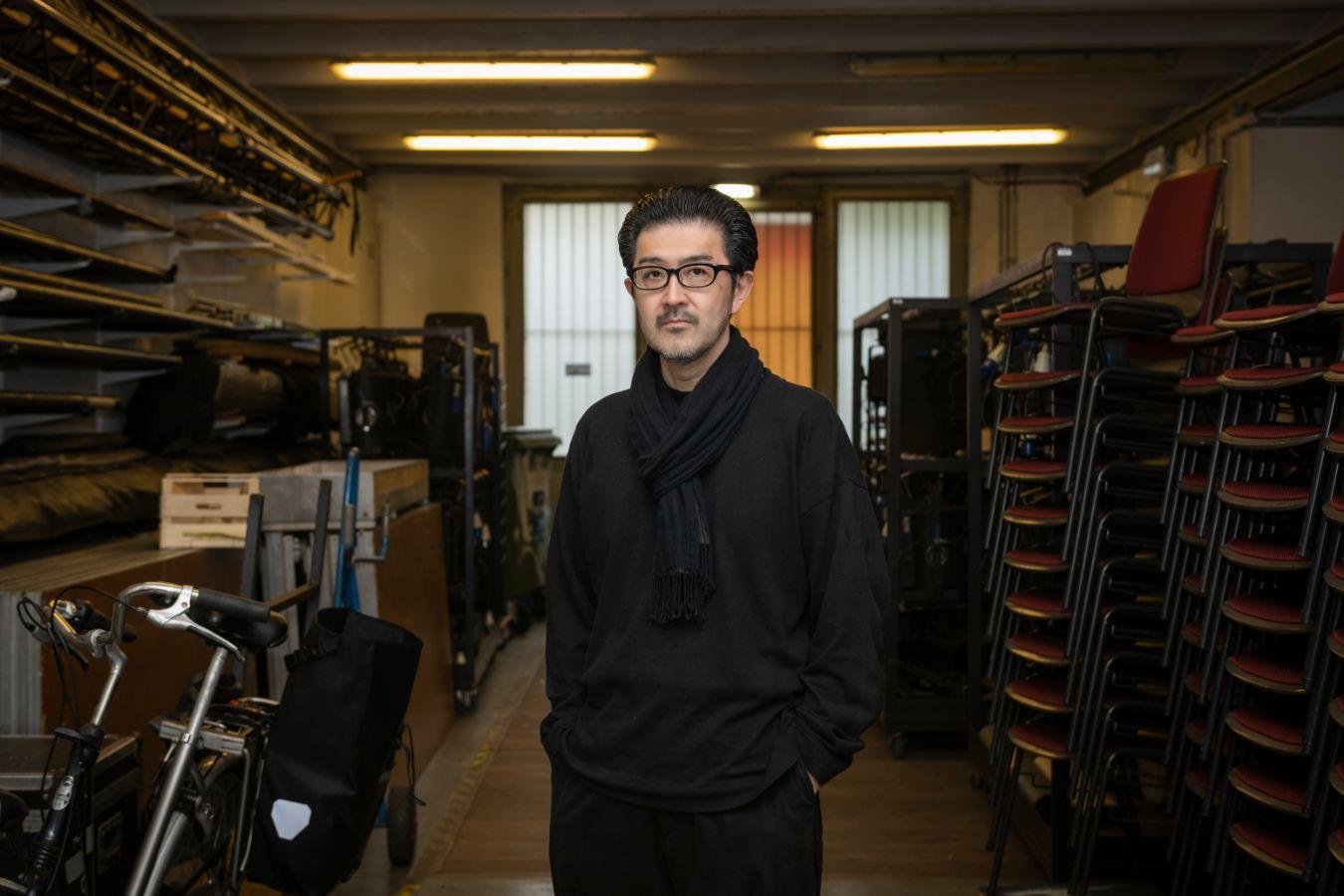
Akira Takayama
© private, photo: Bea Borgers
30 August 2026, 12:00 – 13:30 | Haus der Berliner Festspiele, Kassenhalle
Japanese Brunch
In a relaxed setting on Sunday morning, the artist Akira Takayama will talk about his conceptual theaterical practice and his artistic work What If Berlin and engage in a conversation with the audience.
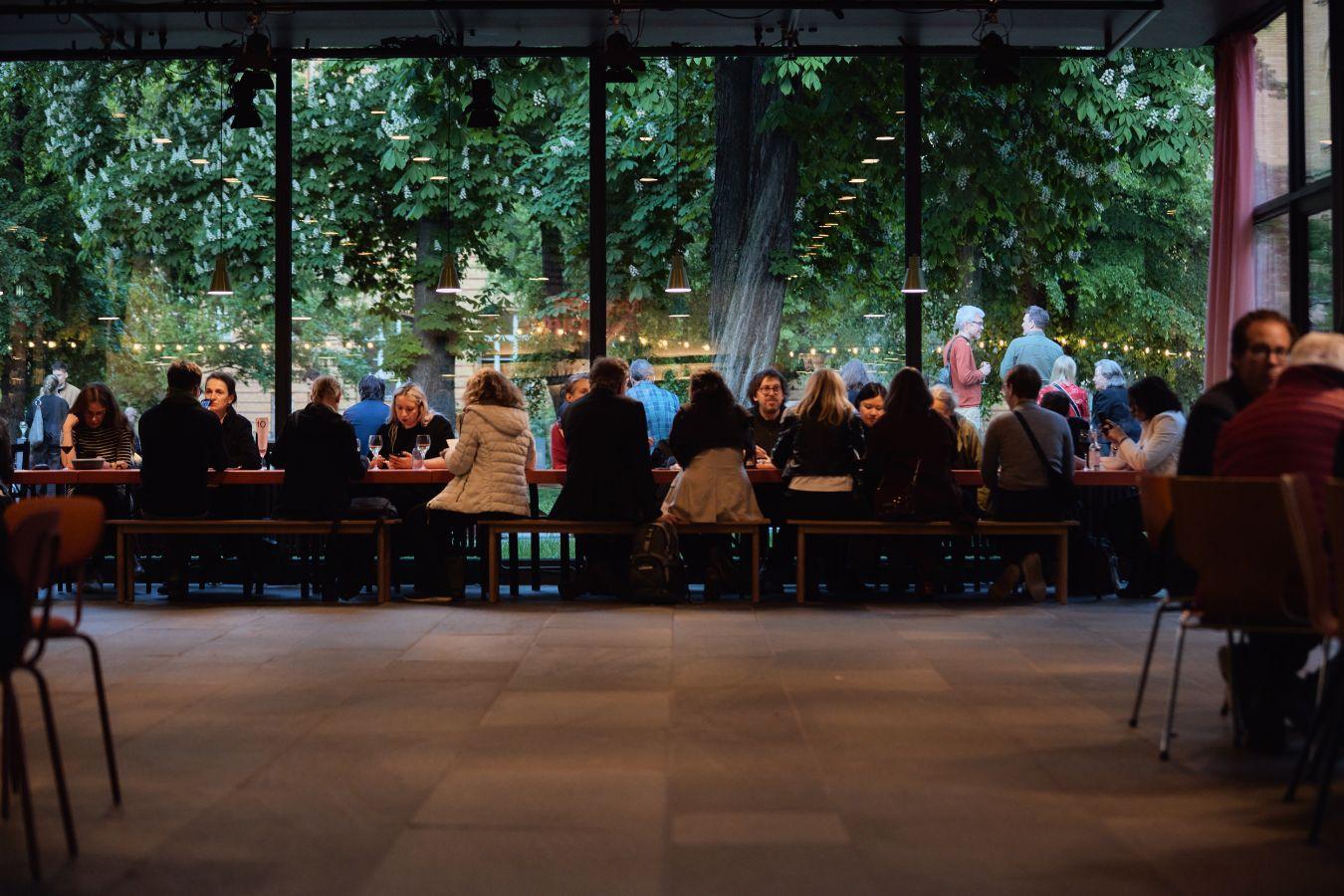
Kassenhalle at the Haus der Berliner Festspiele during Theatertreffen 2026
© Berliner Festspiele, photo: Fabian Schellhorn
21 September 2026 | Philharmonie Berlin
Kanze Nō Theater
Musikfest Berlin
As part of its 2026 European tour, the ensemble of the Kanze Noh Theater from Tokyo will visit Musikfest Berlin. Featuring Kiyokazu Kanze – the 26th Grand Master of the Kanze School – as its lead actor, the company will present three works of classical Noh theatre. The traditional Japanese theatre form was created around 700 years ago and is regarded as one of the oldest in the world. With its visual language, its sense of sound and its (musical) dramaturgy, Noh theatre has had a strong influence on European contemporary music. Its distinctive features include deliberately minimal means of expression, the use of masks and highly formalised physical movements. On the following day, Kiyokazu Kanze will offer unique insights into the world of Noh theatre as part of an education event reserved especially for children and young people.
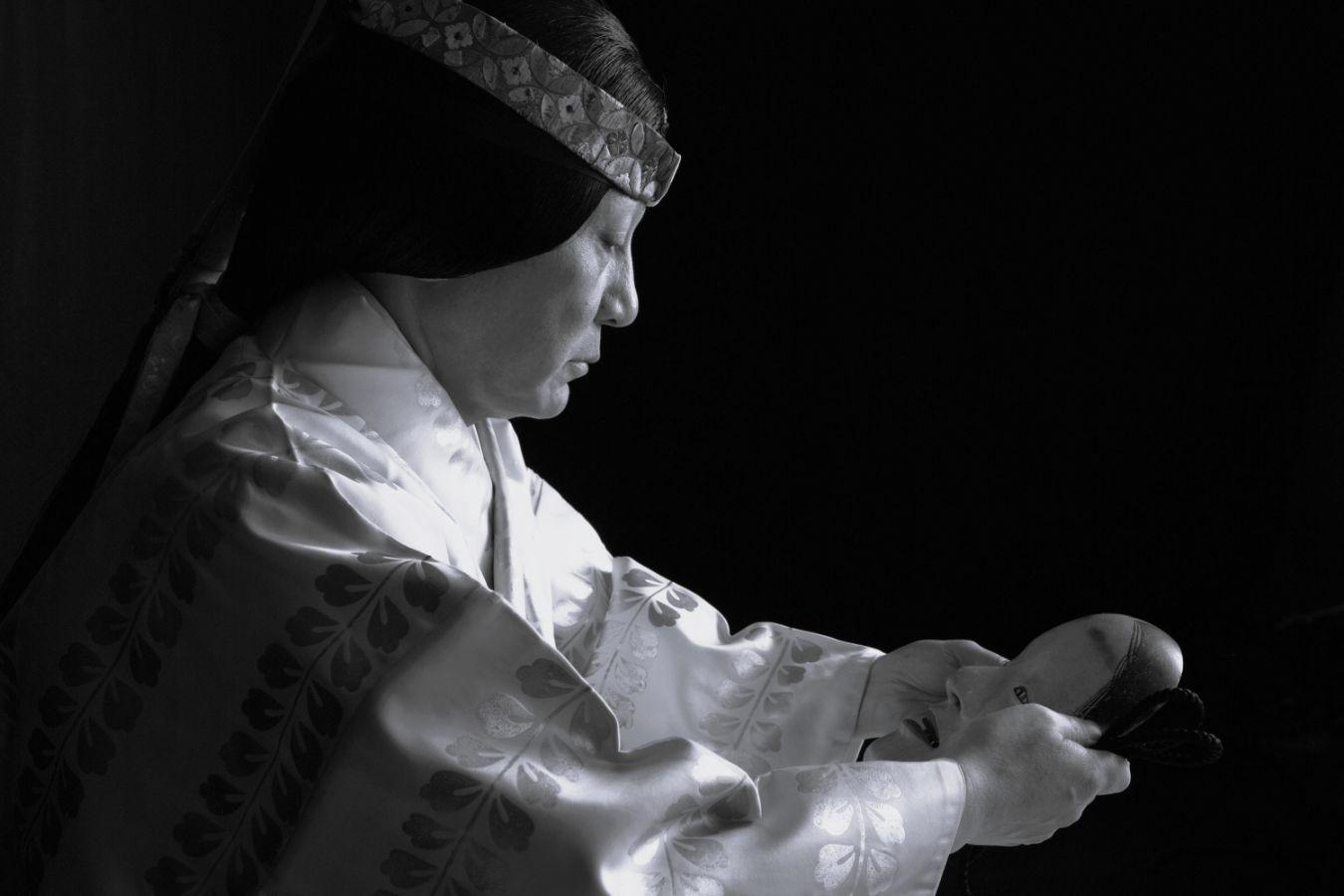
Kiyokazu Kanze, 26th Grand Master of the Kanze School
© Yoshikatsu Hayashi
30 October 2026 | Haus der Berliner Festspiele
Otomo Yoshihide New Jazz Quintet
Jazzfest Berlin
Although he’s probably known as a fierce experimentalist, dwelling on the fringes of noise, free improv and pop as an electric guitarist and turntablist, Japanese great Otomo Yoshihide has many different sides, including his acclaimed work as a composer for film and television. Following the spectacular Berlin debut of his 16-strong Special Big Band at Jazzfest Berlin 2024 – both on the main stage of the Festspielhaus and in the Moabit neighborhood as part of the community activities – the musician will be performing at this year’s festival with the Otomo Yoshihide New Jazz Quintet. In their high-energy performances, the group skillfully combines intricate swing passages, walls of noise, and ecstatic group interplay.
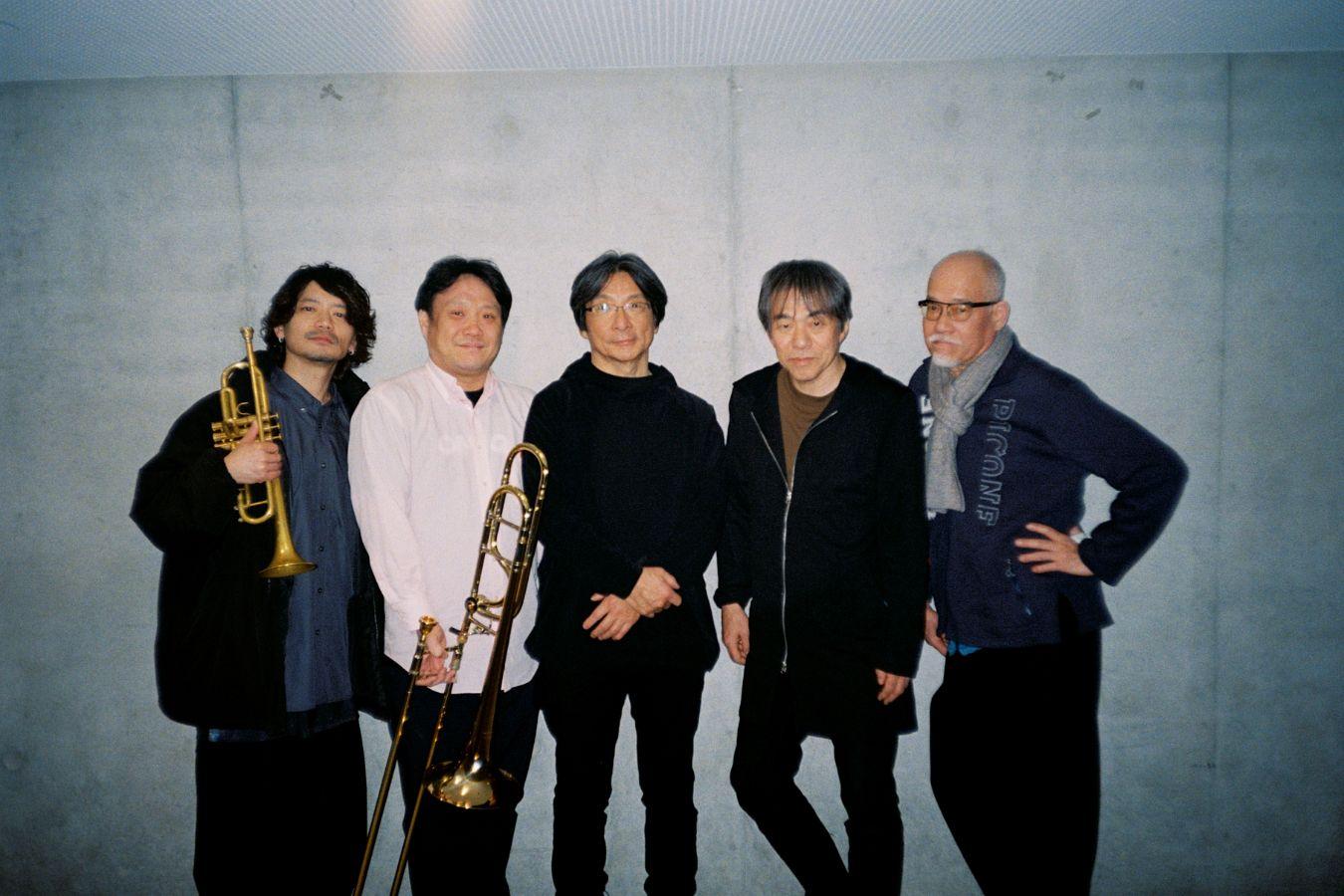
Otomo Yoshihide New Jazz Quintet
© Malwina Witkowska
4 & 5 December 2025 | Haus der Berliner Festspiele
Damien Jalet / Kohei Nawa: Planet [wanderer]
Performing Arts Season
A luminous field, eight wandering bodies: in Planet [wanderer], Damien Jalet and Kohei Nawa create a cosmic choreography suspended between ritual and vision. Dance, material and light merge into a sensuous meditation on movement, vulnerability and our planet Earth.
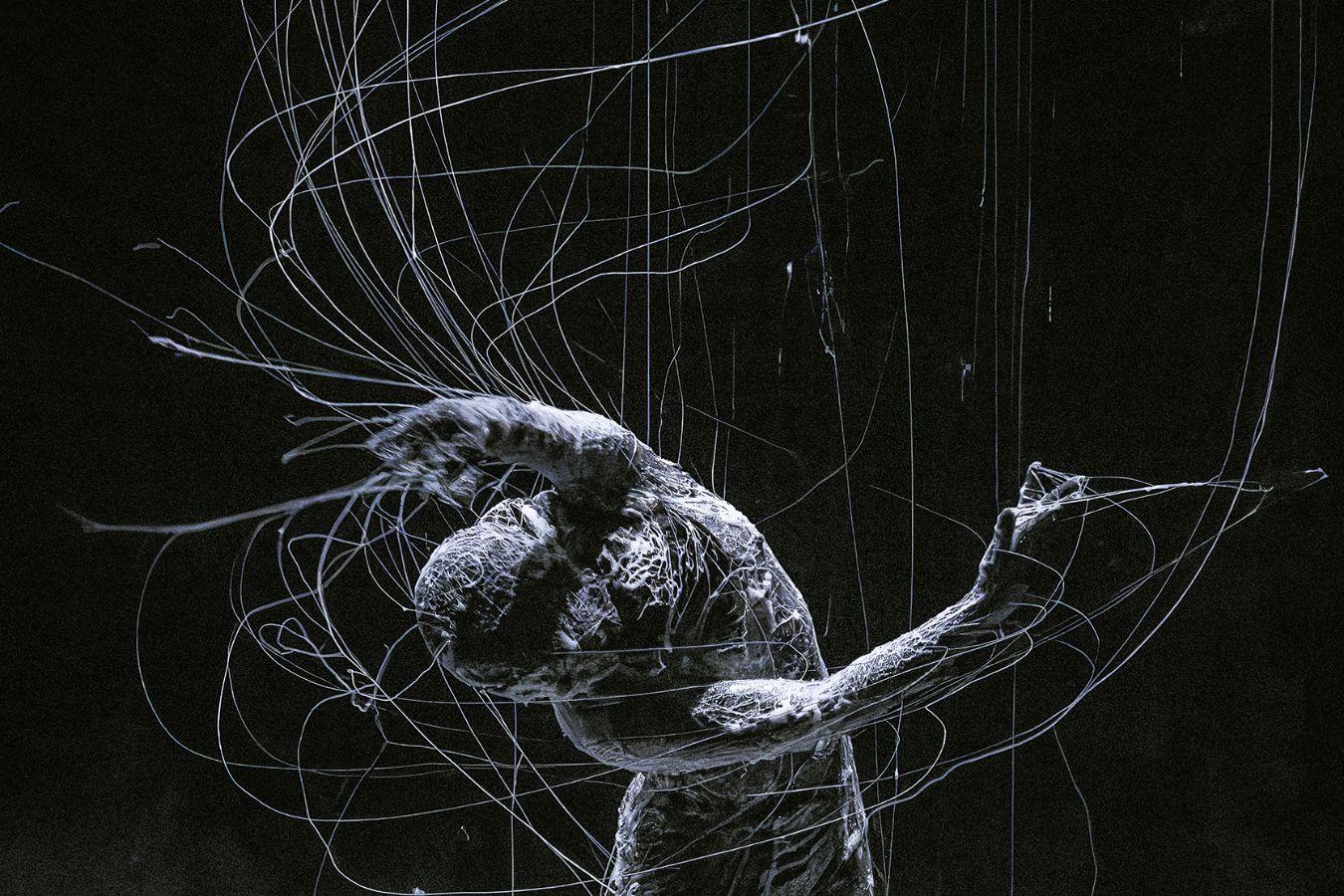
Planet [wanderer]
© Yoshikazu Inoue
15 to 17 January 2027 | Haus der Berliner Festspiele
Dumb Type: 2020
Performing Arts Season
Almost completed, then interrupted: Dumb Type’s 2020 long remained a phantom work. Now it becomes reality. In a hybrid interplay of body, technology and sound, an image of our vulnerable, surveilled and over-informed world comes into focus.
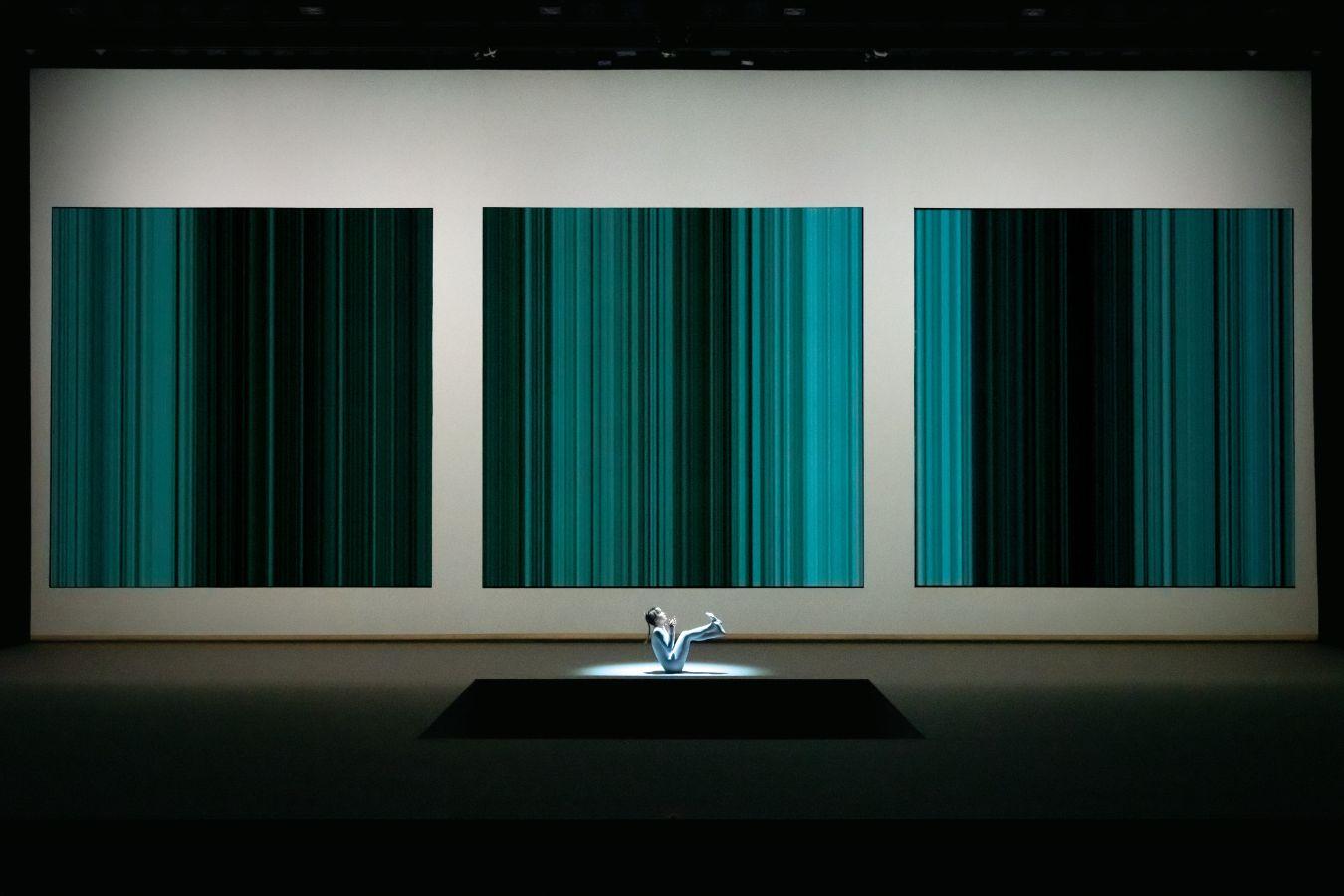
2020
© Kazuo Fukunaga
Partner projects of the Volksbühne am Rosa-Luxemburg-Platz
Satoko Ichihara: Mononoke
Premiere on 3 October 2026
The Japanese author and director Satoko Ichihara is one of the leading voices of a new, feminist generation of theatre makers. For Mononoke, her first production at a theatre in Germany, she invited Berlin-based South Korean artist Mire Lee to create the set design. Lee’s lifelike sculptures are usually showcased in museums. In team with costume designer Belle Santos, Ichihara draws on traditional Japanese Bunraku puppet theatre to create a modern-day interpretation of bodies fused with puppets, flesh growing from iron, and gods you’d better not anger.
A Production by Toshiki Okada
Premiere in February 2027
The Japanese theatre director Toshiki Okada is well known for his sharp-witted, humorous plays, in which he takes a close look at the social issues facing contemporary Japanese society. In his productions, the performers on stage develop a uniquely fascinating repertoire of movement, while the characters’ conversations revolve around the both mundane and existential details of coping with everyday life. Okada made his international breakthrough in 2004 with the production Five Days in March. The piece centred on a ‘lost generation’ of Japanese youth facing a future that offers no hope. More than twenty years later, his first production at the Volksbühne am Rosa-Luxemburg-Platz will again be dealing with private fears and political despair: If you can’t make ends meet, you have to die young.ng. She is haunted by a curse cast on her when her father disappeared ath the teime she got her first period. What follows is Takako’s attempt to free herself from everything that was thrust upon her without her consent. It’s the start of a surreal heroine’s journey through a world populated by gods, dolls, and hardware, by ancient myths and endless sales pitches.
Satoko Ichihara: Yoroboshi
Guest performance in spring 2027
With the piece Yoroboshi, which premiered in 2023, Satoko Ichihara returns to the Volksbühne am Rosa-Luxemburg-Platz in spring 2027. The guest performance reimagines the Japanese legend of the “blind weakling” (Shuntokumaru), unfolding a moving story about loneliness, violence, and sexuality.
In partnership with the Japanese-German Center Berlin