Exhibition Texts

Gabriele Stötzer, Gesten - Selbstinszenierung, 1981, Courtesy: Gabriele Stötzer, photo: Cornelia Schleime
© VG Bild-Kunst, Bonn 2026
“I always wanted to know things from the inside, to crawl into them, to grasp what’s behind them. My approach is to be outrageous, to break boundaries.”
— Gabriele Stötzer
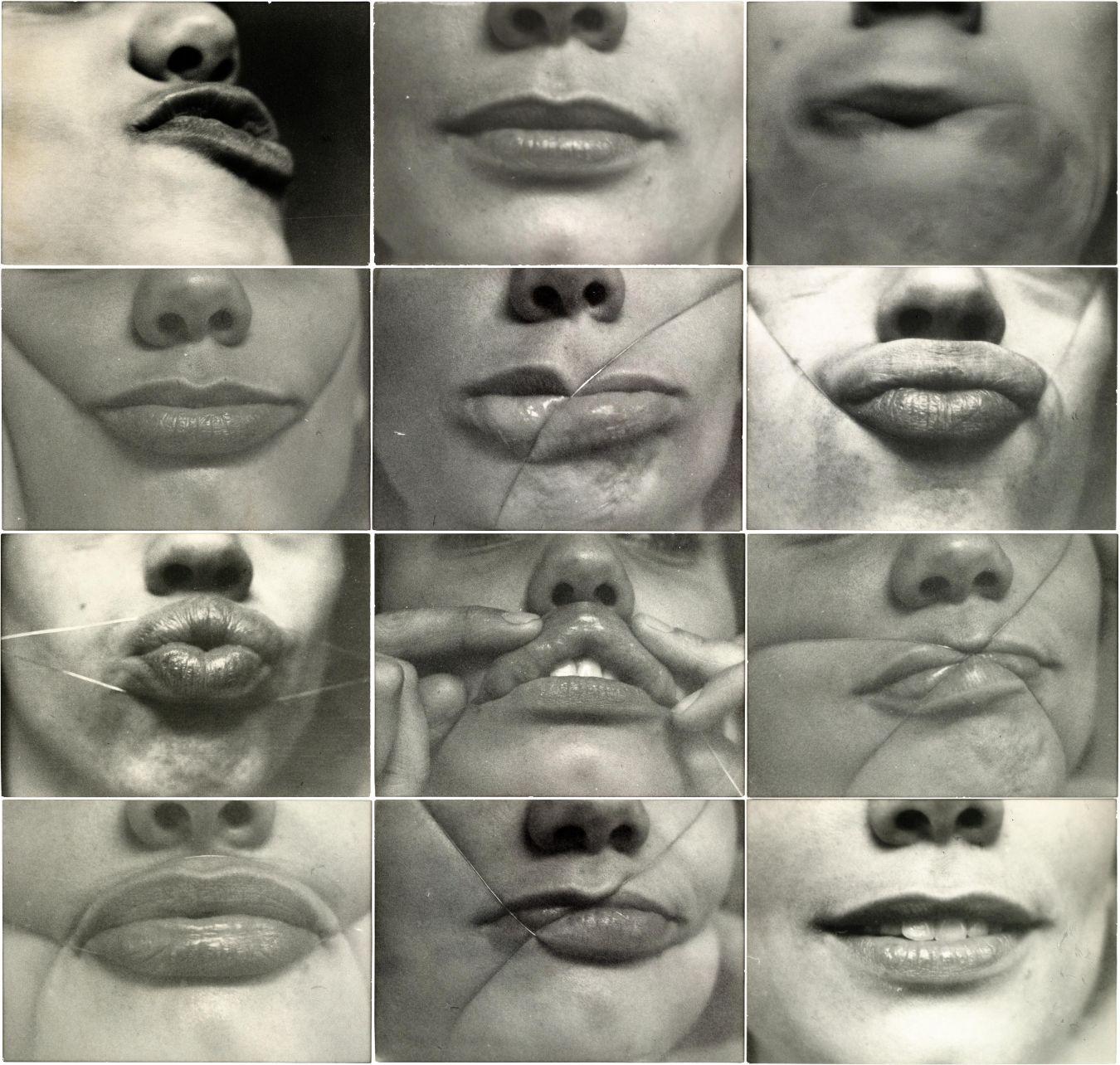
vGabriele Stötzer, Lippen mit Draht, 1983, Courtesy: Gabriele Stötzer
© VG Bild-Kunst, Bonn 2026
For over five decades, Gabriele Stötzer has grappled with notions of justice, self-determination and the possibilities for resistance. In her art, the female body becomes a site for feminist empowerment and protest. Dabei sein und nicht schweigen (Showing up and Not Remaining Silent) brings together drawings, photographs, textiles, writing, film and performance. These experimental works offer bold counterproposals to state power and patriarchy, incessantly creating spaces for radicalism, desire and solidarity.
Stötzer’s groundbreaking artistic practice goes hand in hand with her experiences of imprisonment, self-organised infrastructures and the fight against repression in the German Democratic Republic (GDR). As part of the underground scene in Erfurt, she squatted houses, organised workshops, studios, exhibitions and interventions in public spaces. In the face of rising authoritarian forces in society and politics, Stötzer’s artistic strategies map out individual and collective action that can serve as a model for us today.
Undine Comes
Figures from mythology and tales recur throughout Stötzer’s work. Early on, they appeared in her drawings, writings and costumes. In this work, they take the form of larger-than-life sculptures. For the first time, this group of figures is being exhibited together.
The title references the 1961 text Undine geht (Undine Leaves) by author Ingeborg Bachmann (1926–1973). In this poetic monologue, the mythological figure Undine turns away from human society, and specifically from men, whom she views as cold and destructive. Undine kommt expresses Stötzer’s conviction that this “primal female energy”, as she calls it, “must return and learn to look. We must endure a confrontation with the destruction.”
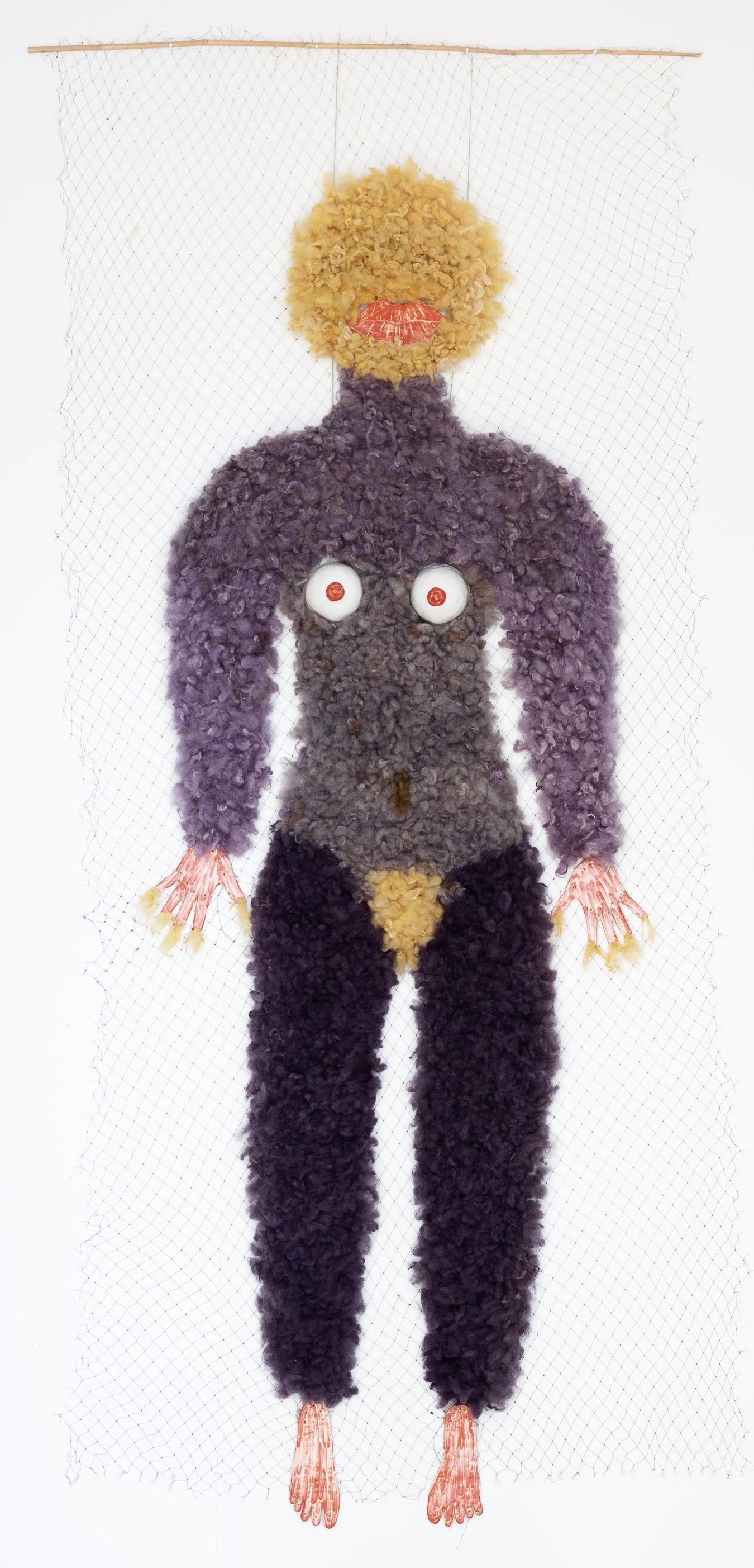
Gabriele Stötzer, Die unbotmäßige Frau, 2022, Courtesy: Gabriele Stötzer
© VG Bild-Kunst, Bonn 2026
So, you had to decide: am I buying a sausage, or am I buying film for my Super 8? When colour film was available, you’d have to give up two sausages. We were broke, but were totally fascinated by freedom. We’d completely abandoned the dogma of compulsory labour.
Localisations
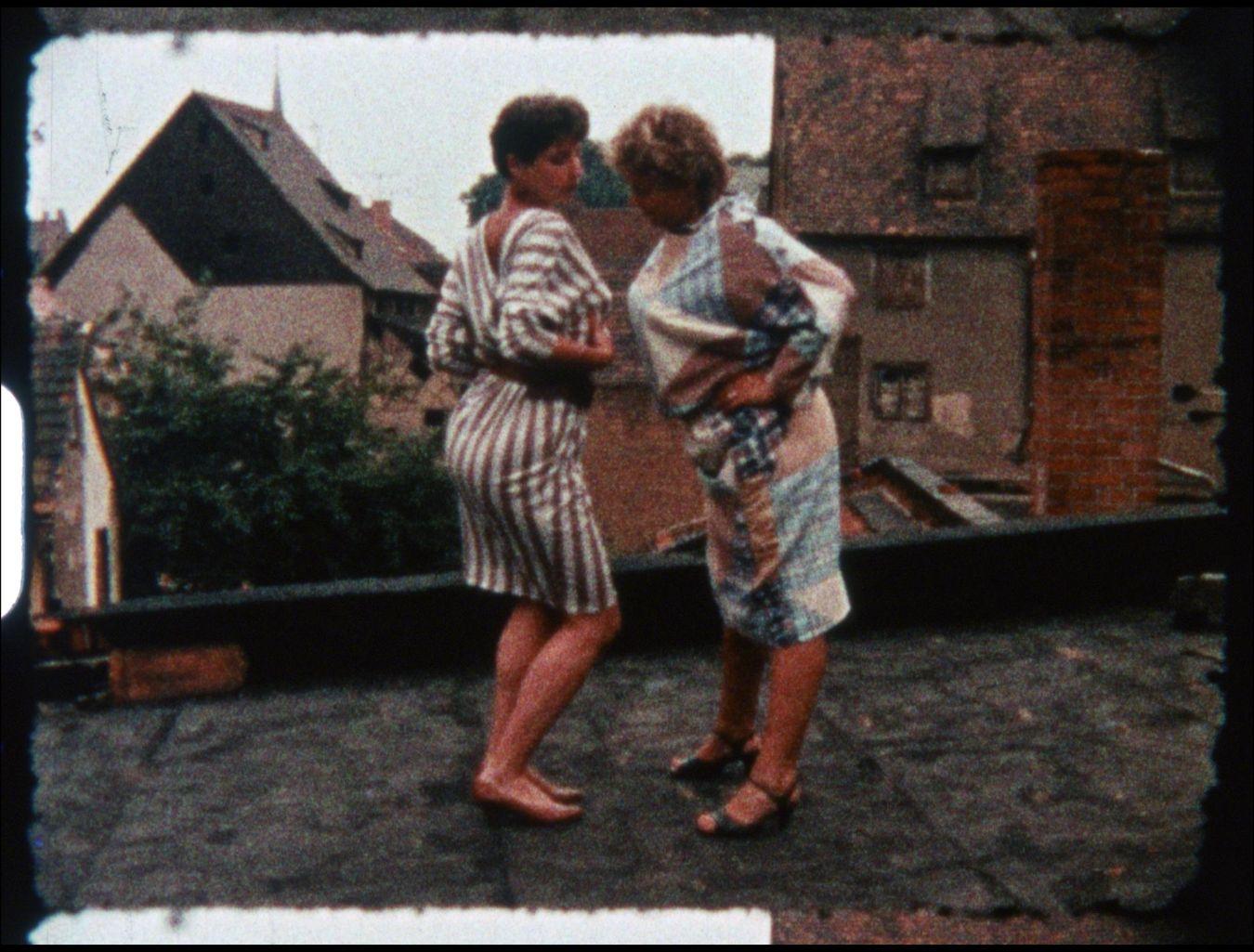
Künstlerinnengruppe Erfurt, film still from Komik-Komisch, 1988, Courtesy: Gabriele Stötzer
© VG Bild-Kunst, Bonn 2026
In the mid-1970s, artists in the GDR began using Super 8 film as an artistic medium, separate from the state-controlled film industry. Gabriele Stötzer played a key role in connecting the local scene in Erfurt and beyond. In 1982, she began filming both behind and in front of the camera, shooting in flats, courtyards, on rooftops and in public places across the city.
With their experimental use of this medium, Stötzer and the artist group Künstlerinnengruppe Erfurt explored new narrative possibilities: they created montages, intercutting documentary material and everyday observations with surreal dream sequences and performative roleplays. Initially, the films were made without sound. Only when screened in studios, private spaces and alternative cinemas did they begin adding spoken word and noise as well as playing cassette tapes and improvised live music.
I was often left on my own, down and out. That’s when I started drawing on the furniture and the dishes I used every day, on my wallpaper. Then I could see something of myself, I could recognise myself. I needed those drawings around me like kindred spirits, telling me that I existed, that I was there.
My Scribbles
Drawing, like writing, is an almost daily part of Gabriele Stötzer’s practice. Her associative texts and drawings often emerge simultaneously: a combination of figures, symbols and swiftly-drawn lines, jagged and looping, overlap with words in the margins of her notebooks and sketchbooks. Across four decades, Stötzer has created her own alphabet of motifs, including light-footed people with punk haircuts, mythological chimeras and body fragments.
Her interest in serial arrangements of poses and gestures was evident even in her early sketches, made first as a student and then in self-organised life drawing groups. The artist’s work in photography and film extended this interest still further. Stötzer expands the possibilities of the medium, letting her graphical gestures spill across and beyond a sheet of paper, overtaking her surroundings altogether.
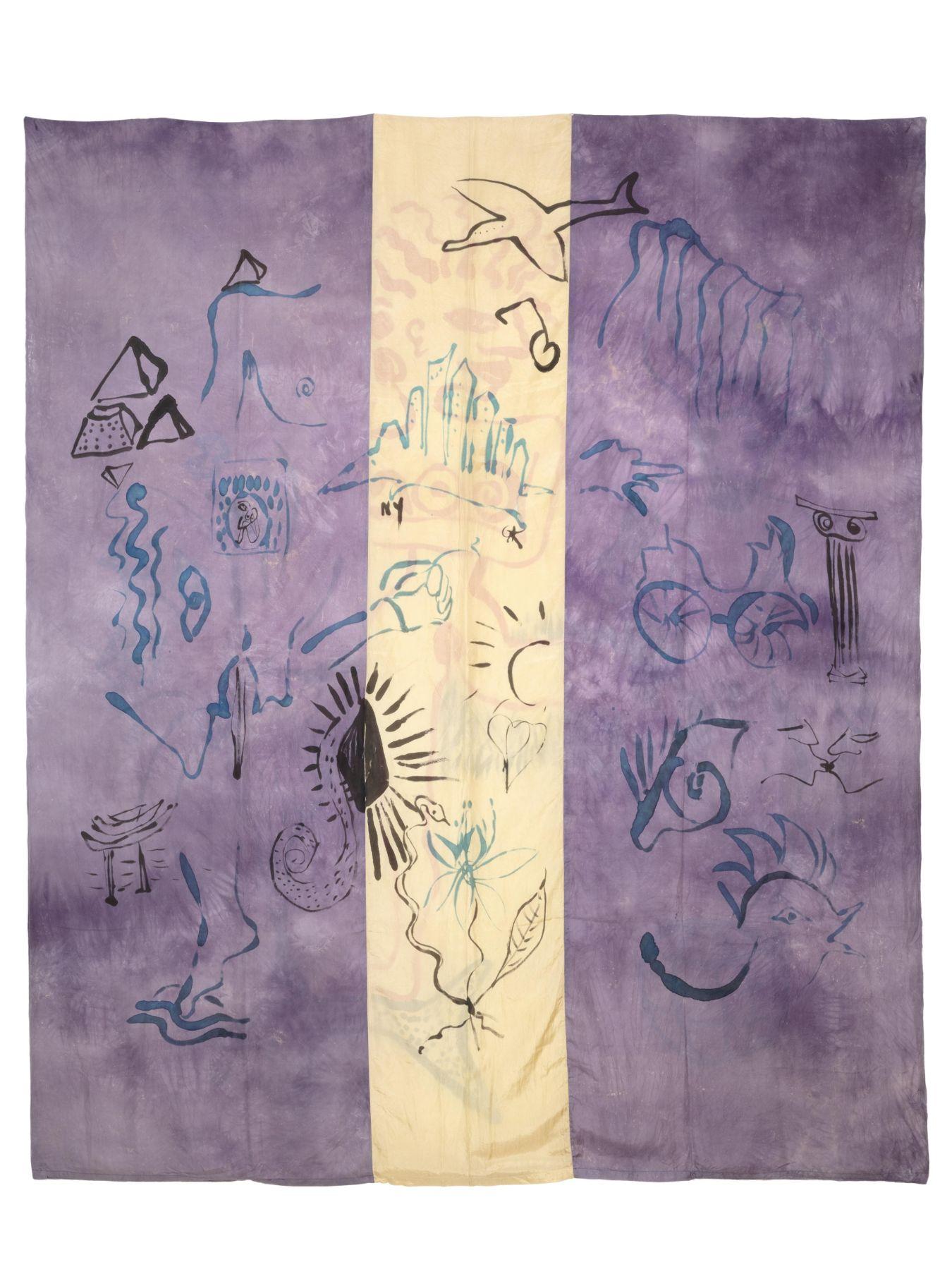
Gabriele Stötzer, Bettbezug II, 1993/94, Courtesy: Gabriele Stötzer
© VG Bild-Kunst, Bonn 2026
This was when I started bundling up my many photos into books, like my own little gallery which I could take along with me everywhere, opening it and then folding it back up. But the books also form chapters I had to work through to the point of exhaustion: books on our art interventions, on punks, on changing images of women.
From the Front and from Behind
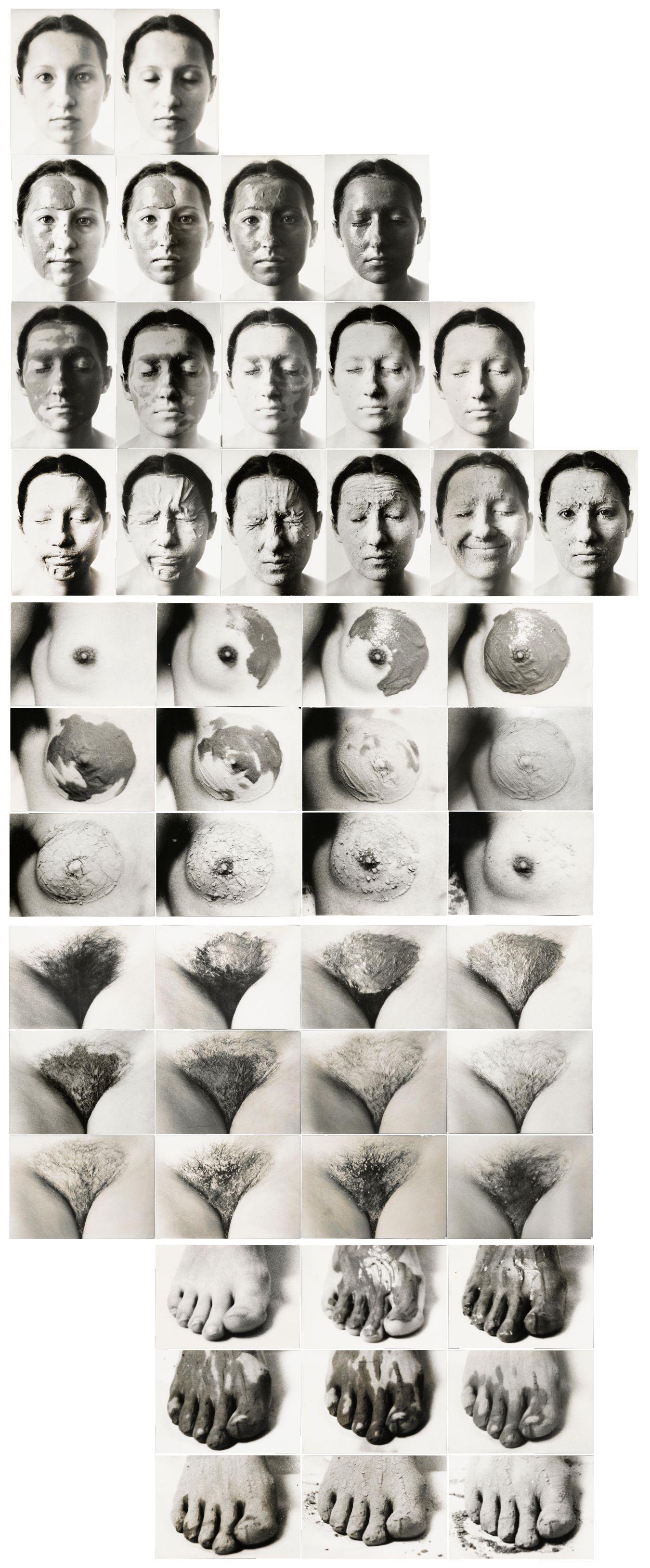
Gabriele Stötzer, Heilerde – Gesamt, 1982/2024, Courtesy: Gabriele Stötzer / Galerie Loock, Berlin
© VG Bild-Kunst, Bonn 2026
In the GDR of the 1980s, artists’ books were a widespread medium, from which entire microcosms could unfold. Between 1982 and 1988, Gabriele Stötzer created 13 book objects, leporellos and folios using cardstock, parchment paper, plastic and other materials. Within these arrangements of photographs, text, prints and drawings, Stötzer’s themes and techniques overlap and converge. Some of them are dedicated to specific people from her personal circle, or to the various scenes she was part of.
Yet for Stötzer – an underground artist who never became a member of the VBK, the official association of visual artists in the GDR – the books also played a highly practical role. Since many of her activities and social meeting spots would come to be broken up or banned by the state, her innovative use of the book format allowed her to showcase her work independently of the limited exhibition opportunities, with the ability to whisk it away as needed.
In a walled-off land, I found myself behind yet another set of walls. I was young enough to find that interesting. While doing time, I remembered I’d wanted to be an artist as a child. Our cell held 20 women. I had to solve the world’s problems by night and then we worked on a three-shift schedule during the day. Art was bound up in a dream of a different life.
Staying Is Also a Choice
Gabriele Stötzer’s life and work are defined by her experiences of isolation and loss. In 1976, she was expelled from the Erfurt School of Education following a protest. That same year, she was remanded in custody for five months for signing a petition, followed by a one-year sentence at Hoheneck Women’s Prison on charges of defaming the state. In subsequent years, the Stasi (State Security) surveilled and deliberately undermined her collaborations with like-minded peers. Many of her friends left Erfurt for East Berlin or West Germany, while Stötzer chose to stay.
After her time in prison, Stötzer resumed making underground art, though she initially lacked an audience in a scene dominated by men. She began to stage herself in photographs to affirm her own existence. Confronted with the camera, she embarked on subtle yet confident experiments with gesture, movement and body painting. While photographing, Stötzer often pushed beyond her limits, sometimes working to the point of exhaustion.
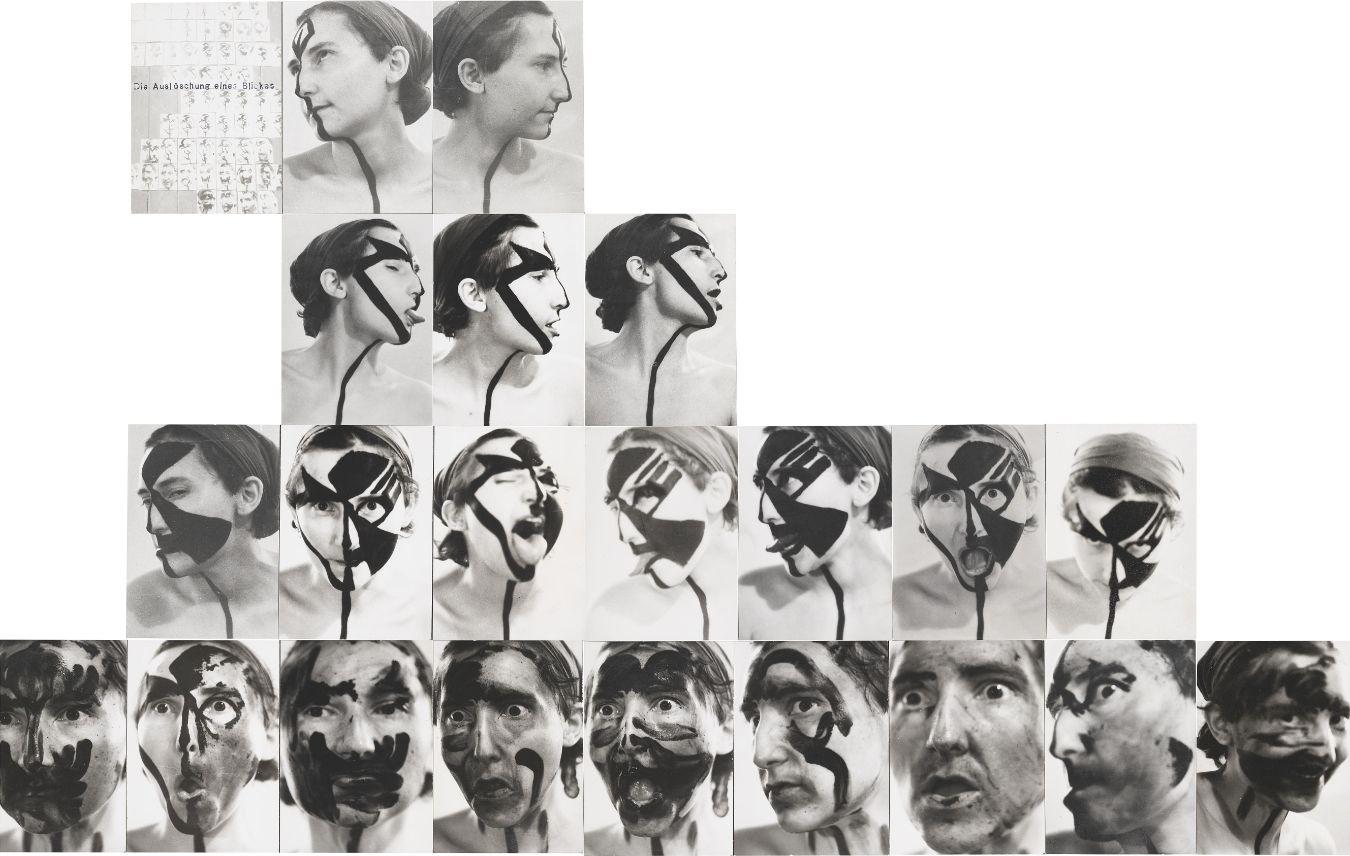
Gabriele Stötzer, Die Auslöschung eines Blicks – Ich trage meine Wunden heute offen, 1983, Courtesy: Gabriele Stötzer, photo: Heike Stephan
© VG Bild-Kunst, Bonn 2026
Our guiding principle was to make our lives the subject of our art through fashion, film and performance. This gave our individual protests and ruptures meaning, and helped us to not fizzle out in our own lonely rebellions.
Women Together: The Künstlerinnengruppe Erfurt
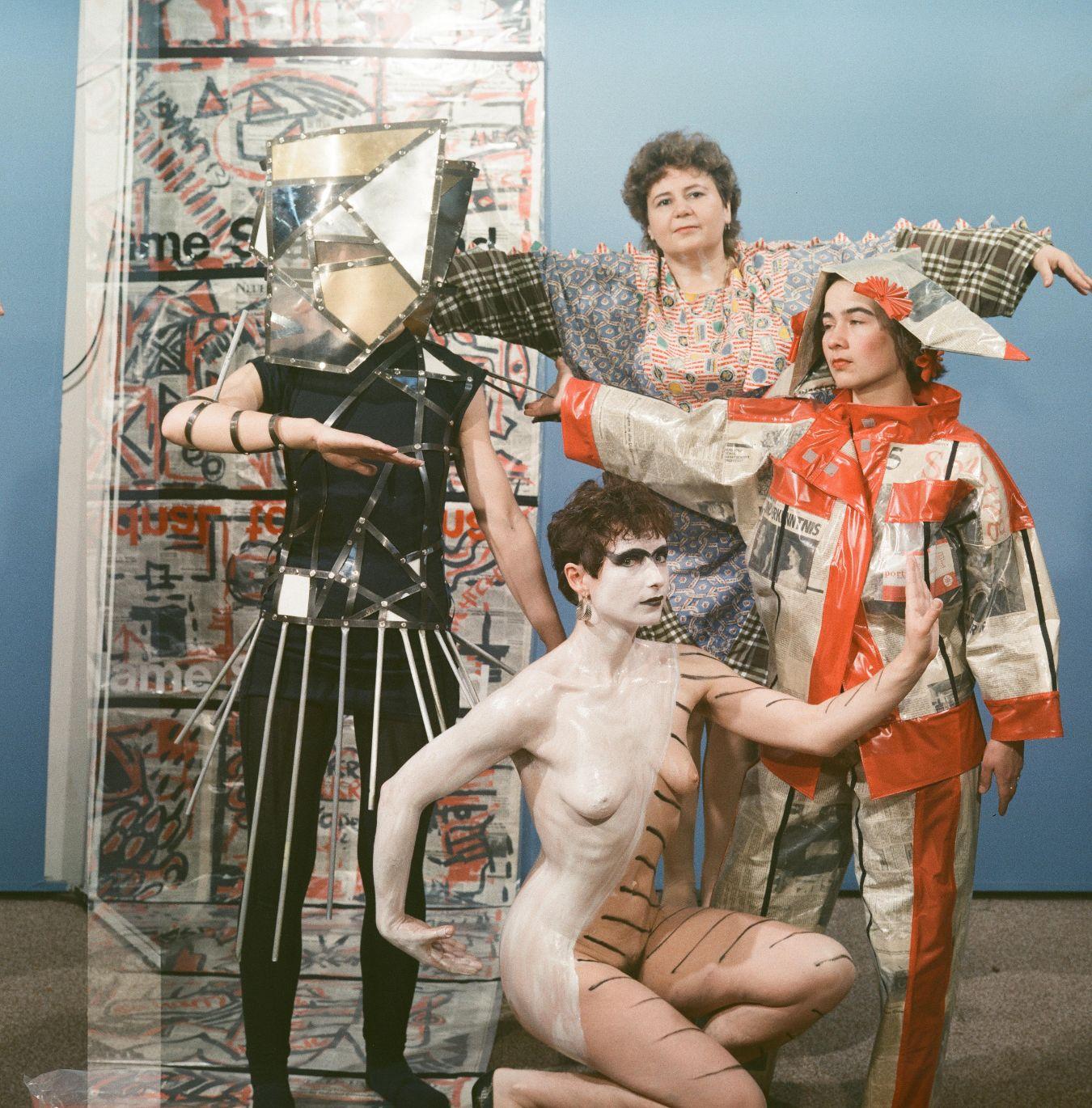
From left to right: Vereny Kyselka in a newsreader costume, Gabriele Göbel painted, Ingrid Plöttner in a dragon dress, Monika Andres in a newspaper costume; Erfurt, 1989, Courtesy: Künstlerinnengruppe Erfurt
© Gabriele Stötzer, photo: Christiane Wagner
“We were Furies, ordinary women, women failing to fit any mould, not even that of dropouts, alternatives, punks, hippies, churchies or artists,” member Monika Andres recalls of the early days of the Künstlerinnengruppe Erfurt. The founding of the artist group was driven by Gabriele Stötzer’s desire to make art in joyful community whilst criticising the political system in provocative interventions. In various constellations, the group created Super 8 films, performances, manifestos, experimental music, photographs, action painting, drawings and fashion between 1984 and 1994. The artist group presented their designs in their Mode-Objekt-Shows (Fashion Object Shows). The first of these was held in a church, allowing them to reach a broader audience beyond art circles. Some of the members, too, previously had little contact with art. For instance, Stötzer’s sister Ingrid Plöttner – a master baker – often participated in films and performances.
Following the collapse of the GDR, the group took part in performance festivals and exhibitions across Germany, France and Switzerland under the name Exterra XX. They established the gallery and studio space Kunsthaus Erfurt in 1990, which continues to be run by member Monique Förster. In recent years, the group has been performing and exhibiting their work more frequently.