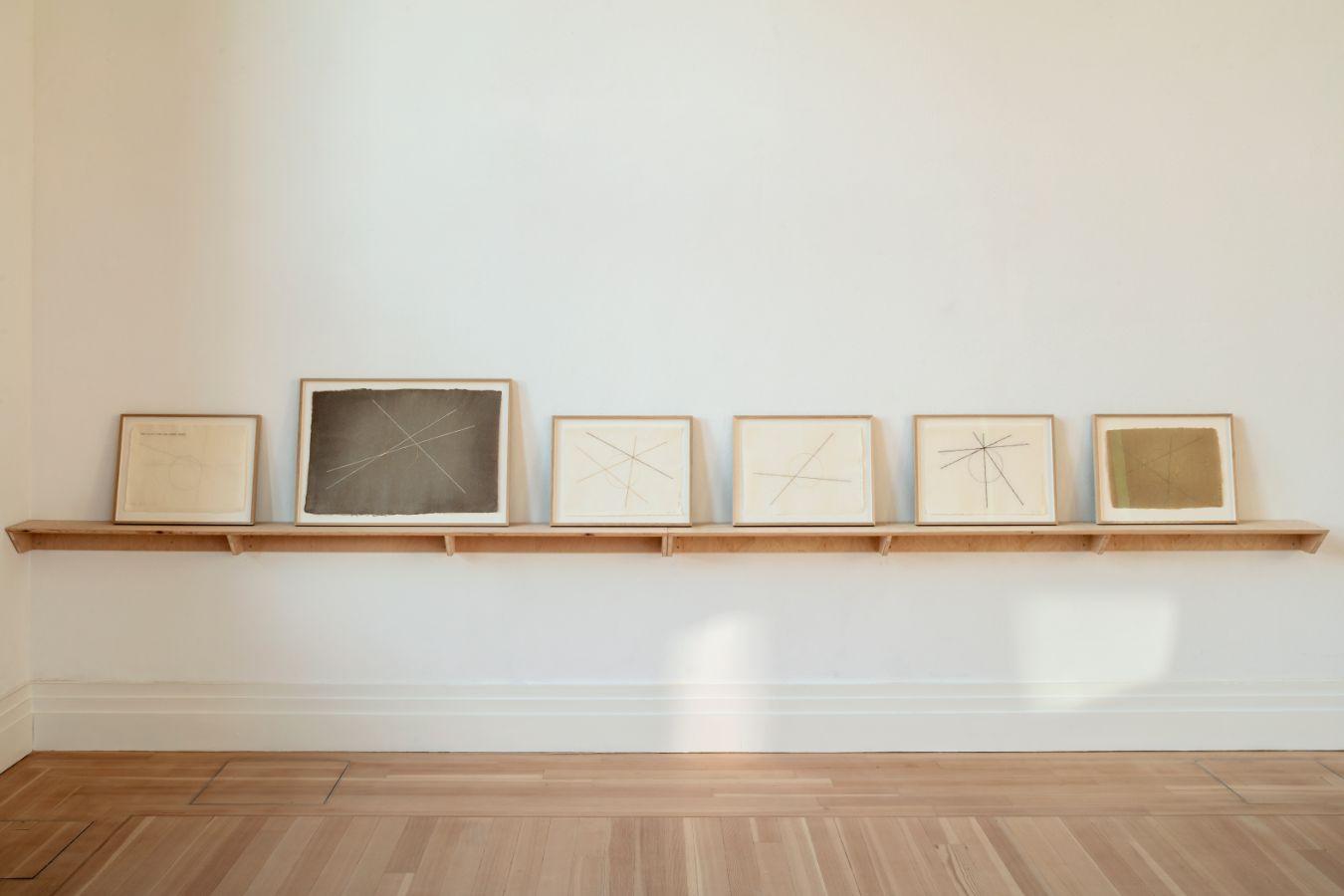
Ayumi Paul, The Singing Project, installation view, Gropius Bau, 2022
© Gropius Bau, photo: Luca Girardini
The Singing Project
Ayumi Paul in Conversation with Patrizia Dander
The extract below is an edited talk between artist Ayumi Paul and Patrizia Dander, Deputy Director of Curatorial Affairs at Gropius Bau, that took place on 2 October 2025. Ayumi Paul was Artist in Residence in 2022 and since then has worked closely together with Gropius Bau.
Patrizia Dander: I’d like to start by asking about The Singing Project’s origins. What was the starting point for the project?
Ayumi Paul: In 2019, Julia Draganović, then Director of the Kunsthalle Osnabrück, asked me if I’d like to have a solo exhibition. It would be my first solo show, and the first time I presented work outside the traditional concert context. The invitation meant grappling with the responsibility and privilege of animating a public space – reflecting on what I wanted to share with others. I wanted to find ways for us to perceive each other more subtly; new ways of being here together.
I remembered a temple I had visited in Varanasi during a trip to India. People there told me the singing had never stopped in this temple. I don’t know if that’s true. And it doesn’t really matter whether it is or isn’t. The mere idea that there’s a place where the singing has never stopped comforts me to this day. These thoughts came together, and I decided that I wanted to create a place of singing.
PD: To what extent were you able to draw on your musical training for the project?
AP: I can apply almost everything I’ve learned as a violinist to the human voice. And unlike the violin, the voice is something most of us have in common. So I simply started running workshops with the goal of transforming the Kunsthalle Osnabrück into a place of continuous song. When the exhibition opened, I was very nervous. It was possible, after all, that nobody would turn up and nobody would sing and a large part of the museum would remain empty. But then so many people came – and sang.
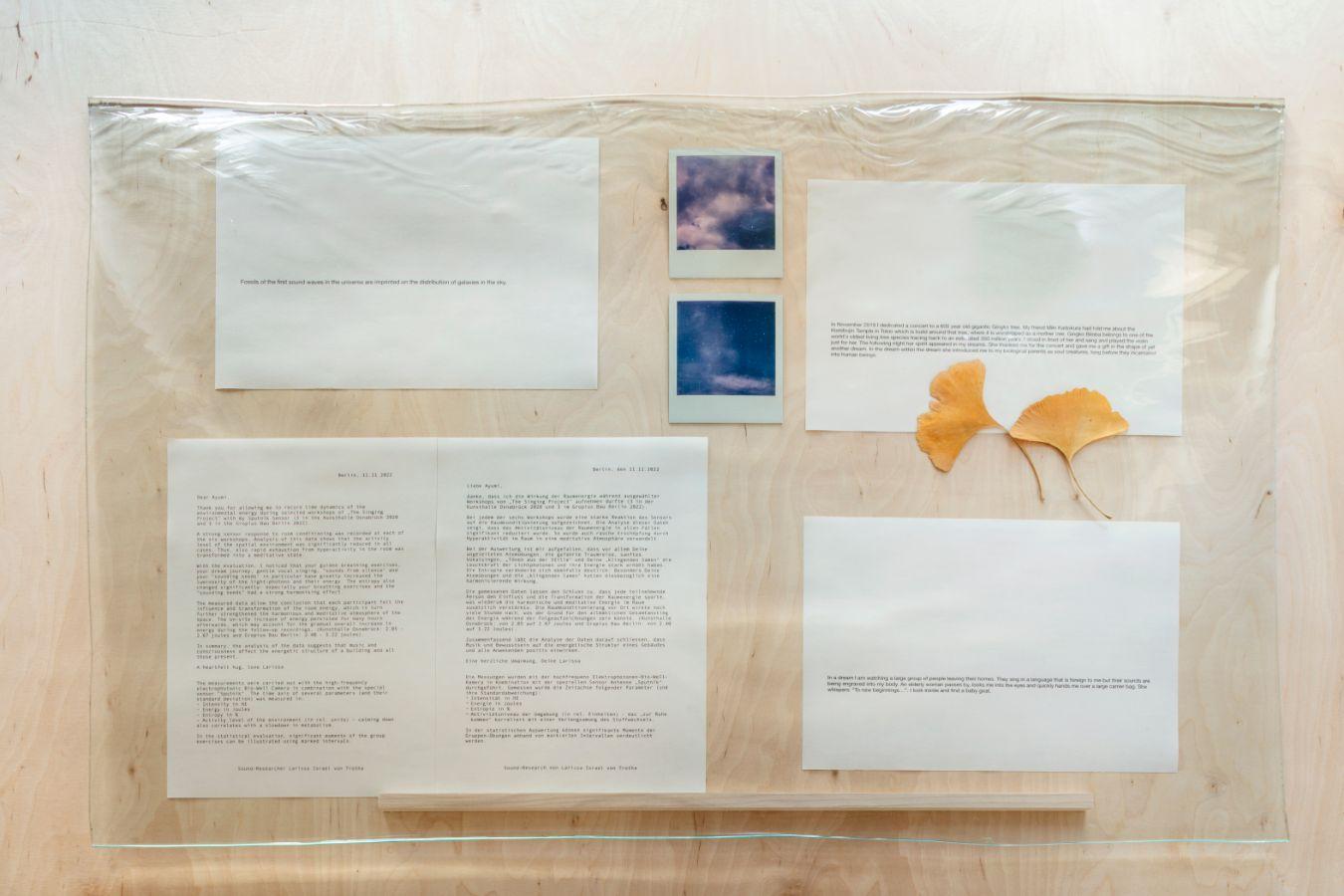
Ayumi Paul, The Singing Project, 2022
© Gropius Bau, photo: Luca Girardini
“For thousands of years, western cultures and contexts have placed a great deal of emphasis on separation and demarcation. The world has been defined by what we can capture with our words and our eyes.”
PD: Pulse, breath and sound play a central role – especially when people sing together. What does communal singing mean to you? Why do you keep coming back to it?
AP: For me, there has never been a strict separation between myself and my surroundings. I sense that even in western science and philosophy, we are increasingly coming to recognise that the mind is collective, and that all matter is imbued with spirit and life. We are beginning to understand that there is no such thing as a non-vibrating object. It is precisely this shared vibration that I wish to convey through The Singing Project.
For thousands of years, western cultures and contexts have placed a great deal of emphasis on separation and demarcation. The world has been defined by what we can capture with our words and our eyes. We are beginning to reconnect with something larger – a shared space in which everything vibrates together. This takes practice, like training a muscle: the more we do it, the more we perceive. The same is true for singing.
And then it’s a bit like the chicken and the egg. We can only voice that which we can imagine. But what does it take for us to be able to imagine something? That’s why the project is first about listening – and not just the acoustic kind that happens by way of our ears. It’s about perceiving what vibration actually is and venturing into ranges of sound that we haven’t yet acoustically perceived. Feeling what happens there. There are practical exercises for this, which I keep weaving into the project.
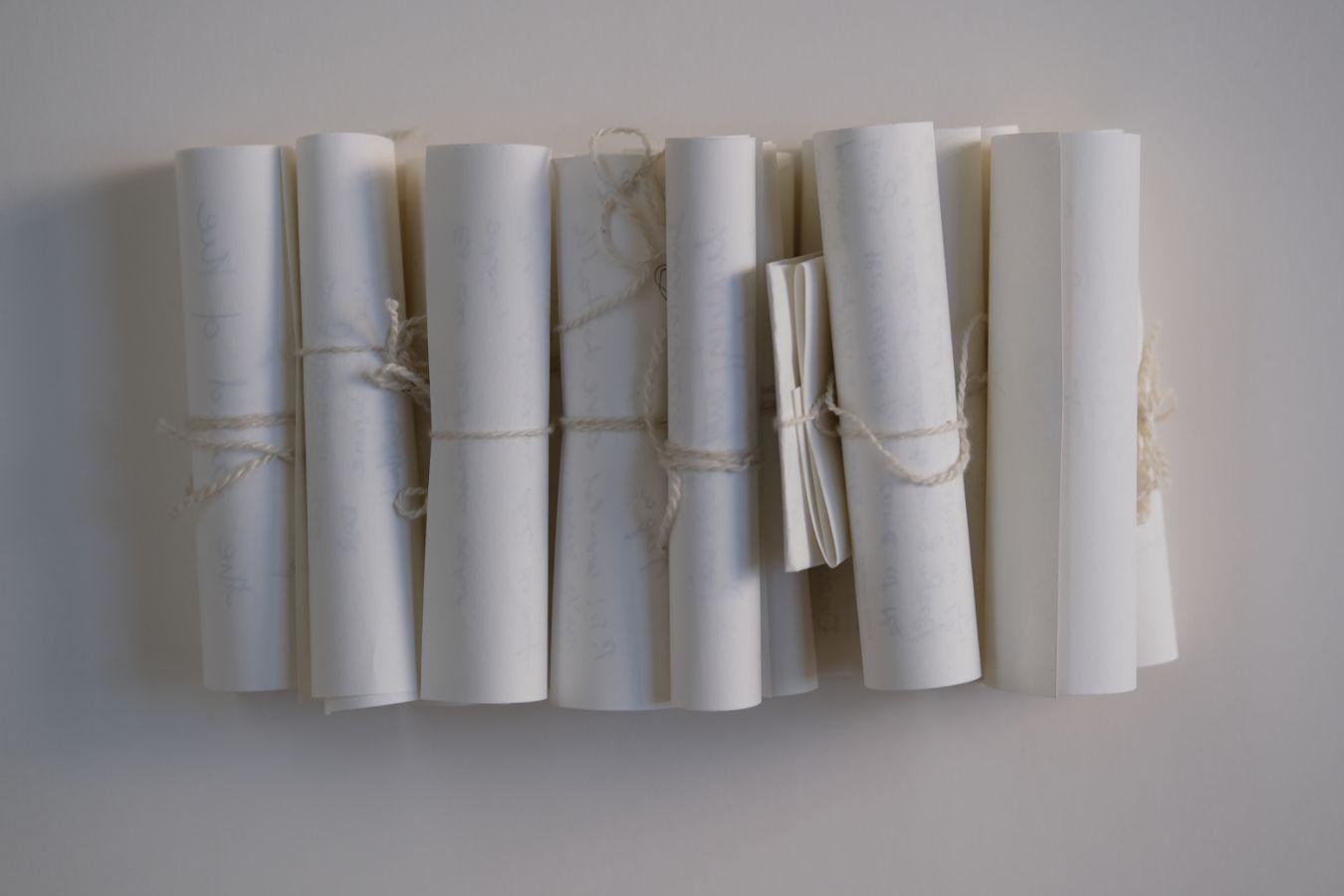
Ayumi Paul, The Singing Project, 2022
© Ayumi Paul
PD: You spoke of wanting to create a singing space. What does it mean to you to undertake such a project within an arts institution – compared, say, to a rehearsal room, or a gathering in a meadow?
AP: It means placing the project in the public sphere, from which it can reach into all areas of life. I dream that this way of perceiving the world as sound emerges not only when we come together to activate the project, but also when we encounter other living beings, when we find ourselves in situations where we don’t know what to do, or when we are alone with ourselves in the morning.
PD: You always activate the project at Gropius Bau on the summer solstice. Why did you choose that particular moment?
AP: There are moments in the yearly cycle that remain undisturbed by calendar systems. One such moment is when the Earth has completed a single orbit around the sun. I believe that these moments will always be perceived by ecological systems, even if humanity may one day cease to exist. I think in broad timescales and hope that the essence of the project will live on – even if, one day, museums as we understand them no longer exist. Maybe people will gather then at this very spot where Gropius Bau now stands, to be together with the world. That’s why I chose this moment – because it is not so easily undone.
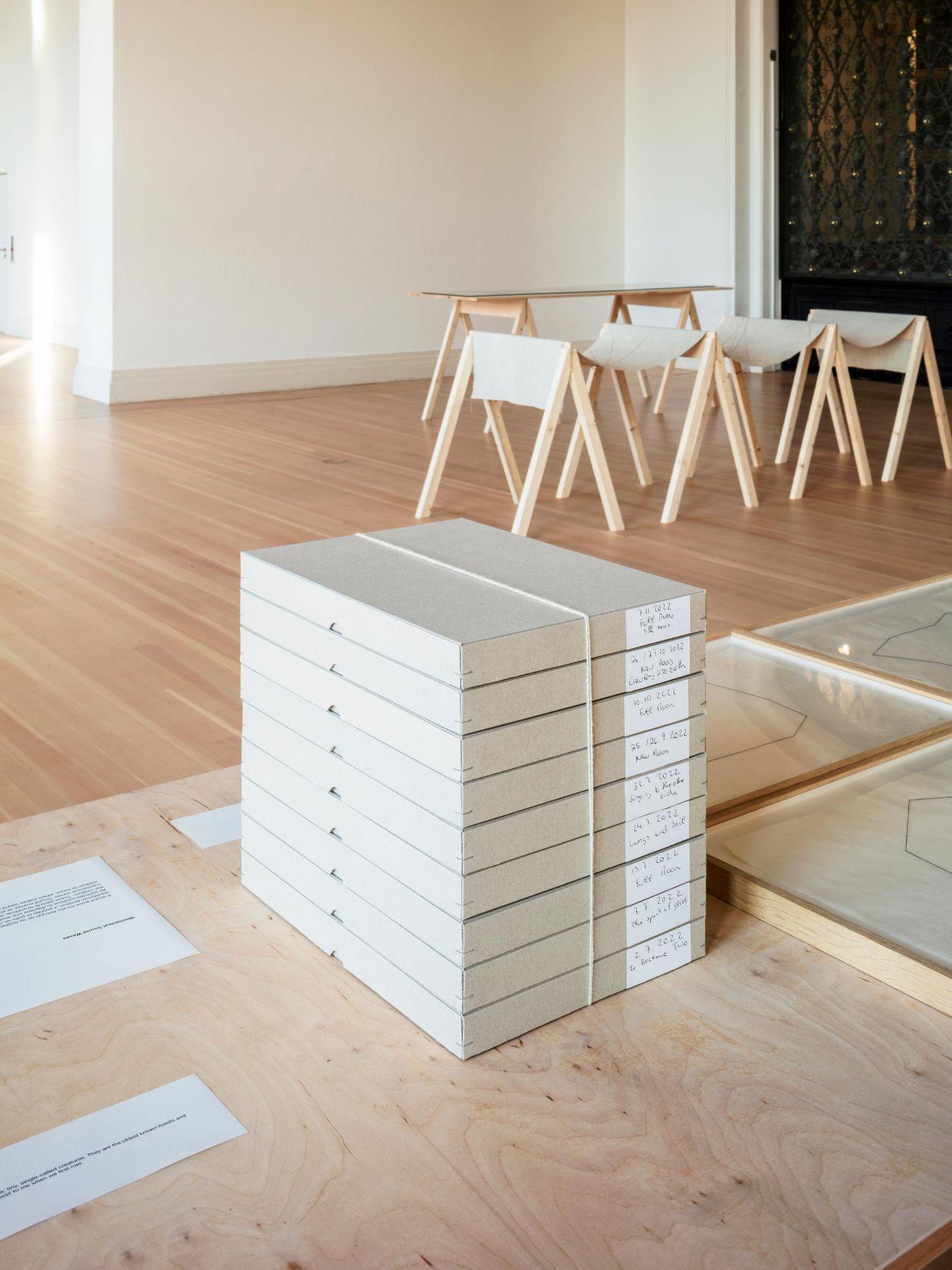
Ayumi Paul, The Singing Project, Gropius Bau, 2022
© Gropius Bau, photo: Luca Girardini
PD: You’ve been doing this for almost 10 years now. How has your experience of and with The Singing Project changed over time?
AP: I learn together with the project. When I started The Singing Project, I wasn’t sure whether I would get it to the first exhibition opening. My Plan B was a sound installation I could have exhibited even if no one had turned up or sung. And now it feels as though the project were already out there in the world before I was. I no longer even ask myself whether or not it will continue. These days, it even takes place in digital space once a month; people can participate from anywhere in the world. That’s perhaps a good example of how, over the years, the project has outgrown both the institutions and me.
PD: What traces might The Singing Project leave behind at Gropius Bau – particularly given that it recurs annually?
AP: There’s a work by the artist Jannis Kounellis that I’ve never seen in person, only ever heard described – and yet I love it very much. In the 1990s, Kounellis designed stage sets for Heiner Müller. One of the sets consisted of black tubes lined with gold. He was asked why the tubes were gold inside – after all, no one could see that. To that, Jannis Kounellis replied that although no one could see it, everyone could feel it. I hope The Singing Project leaves a similar trace at Gropius Bau. It may not always be visible, but everyone can feel it.
Ayumi Paul, The Singing Project, 2022
© Ayumi Paul
PD: This feeling, or sensing, is an important aspect. Singing is about setting something into vibration – and this setting-into-vibration is both physical and deeply emotional. I’m interested in your experiences of participants’ reactions to The Singing Project. What do they take away from it, and what did you encounter during the hours you spent with them?
AP: Many special encounters immediately come to mind. I’d like to share a memory from my time in Osnabrück. At the beginning of the project, a group of female students from Russia, near the Siberian border, participated in a workshop for The Singing Project. They were in Osnabrück as part of a student exchange programme, and it was one of their last days in Germany. A few weeks later, we received an email with a photo of the students who had participated in the workshop. They were in a forest, their arms stretched upwards. In the email, they wrote that where they live, they couldn’t sing in a museum. So they met in the forest instead and continued singing the project there. Just the thought that there’s a place on the border of Siberia where people might still be singing strikes me as very special – much like the temple in Varanasi, where, according to the stories, the singing never stops.
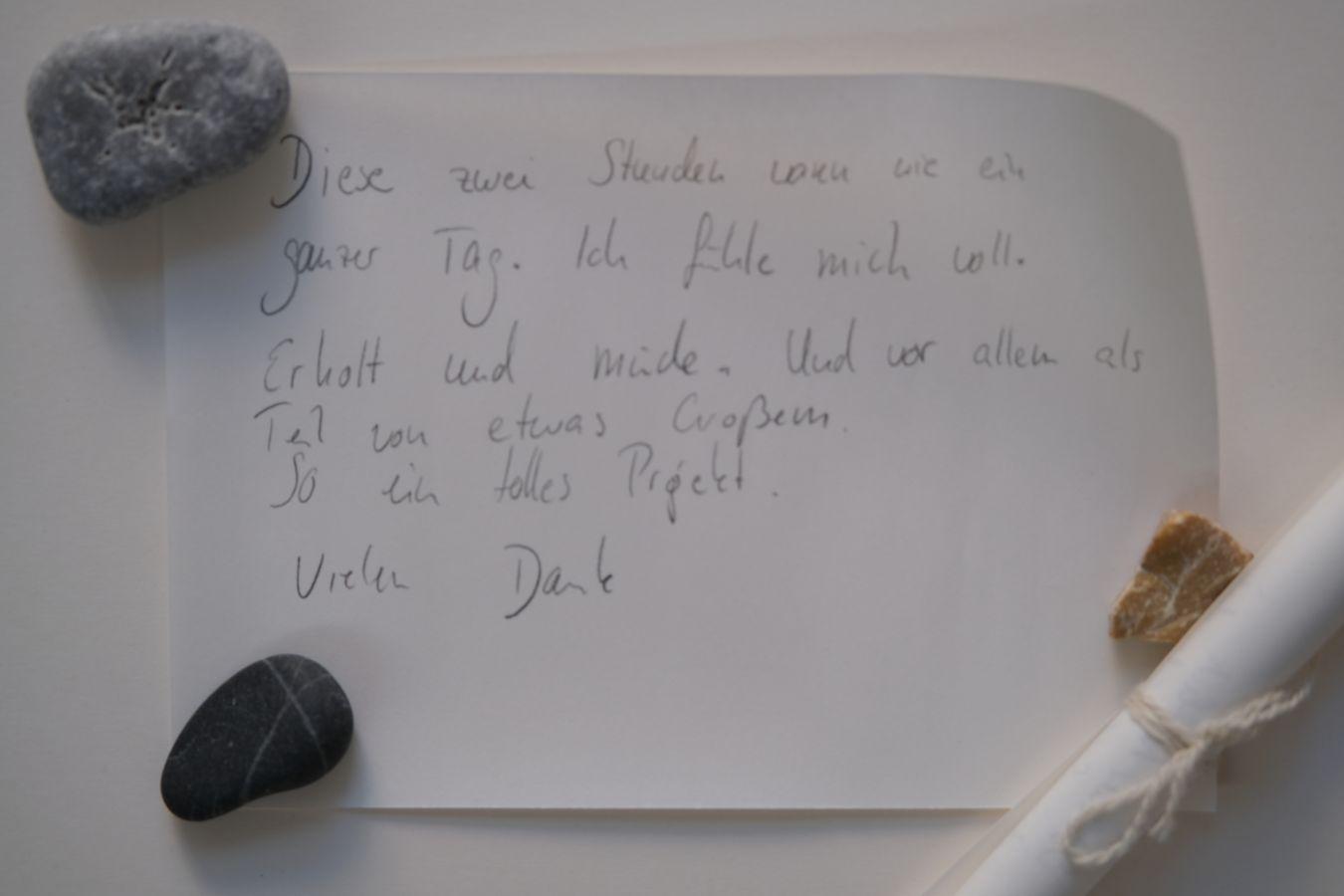
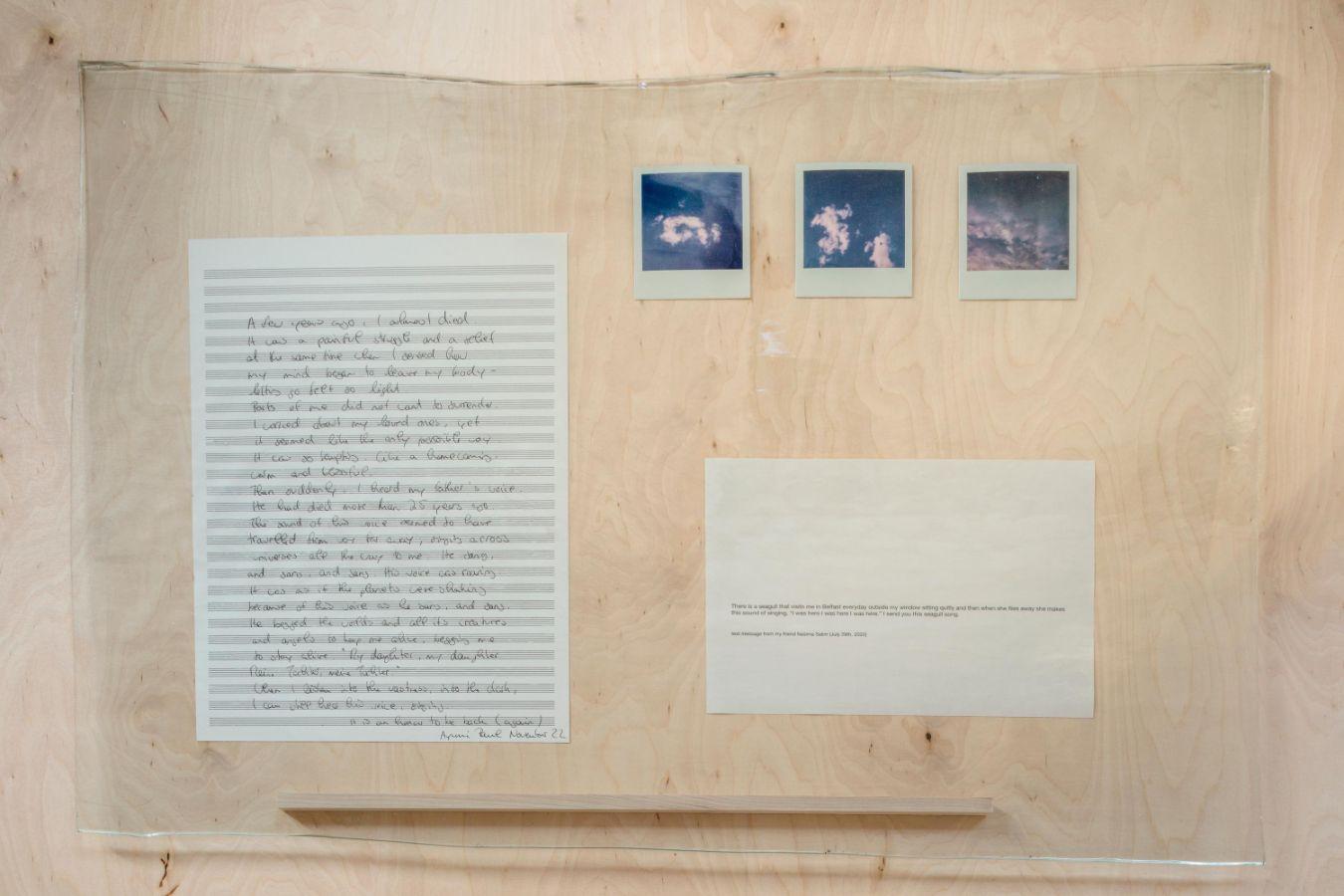
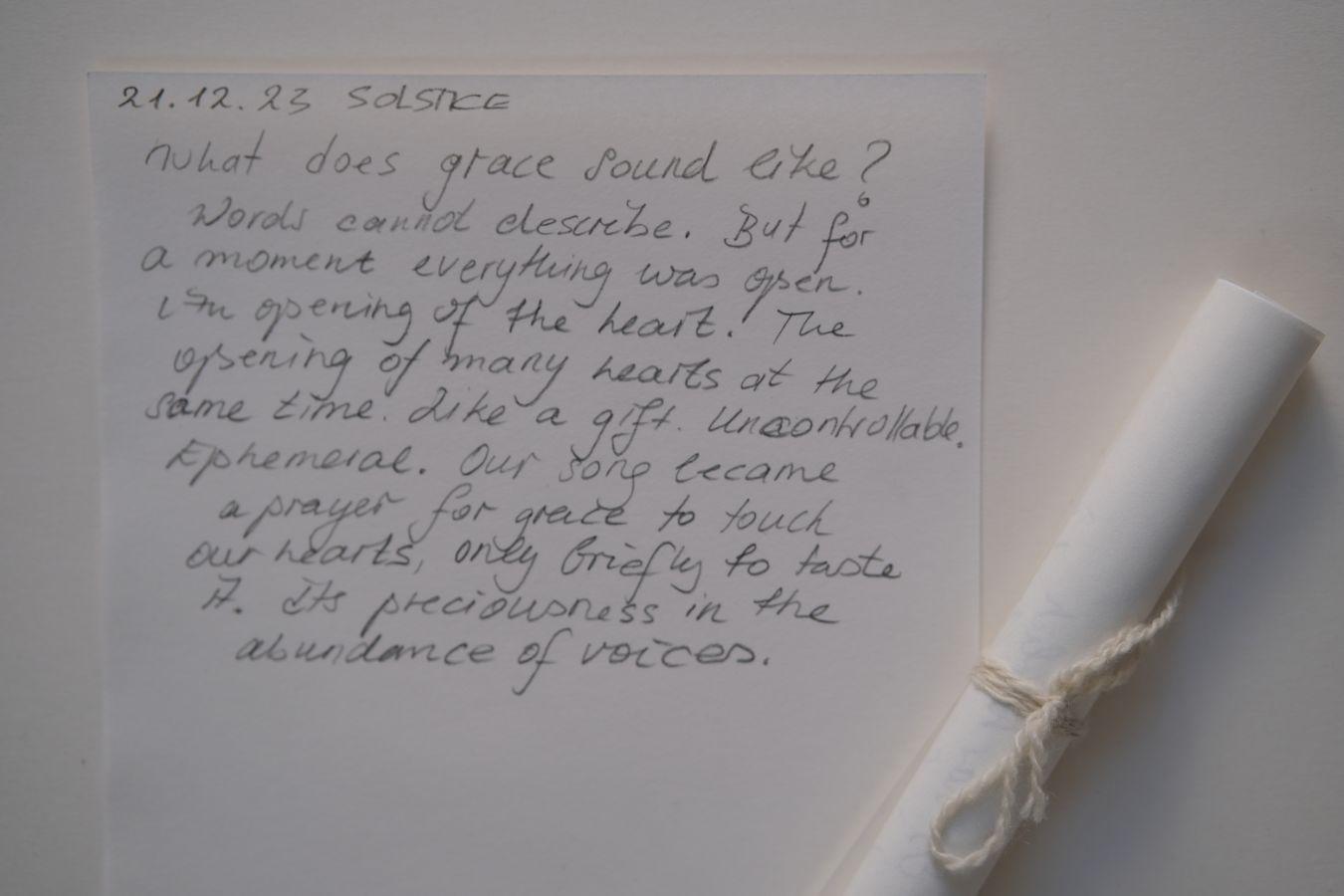
At the same time, I’ve always asked myself how to document the project. I don’t want to make audio recordings, and I don’t want any filming or photography during the sessions. Documenting through images has taken on such importance today that I often find it invasive. And so after many workshops, I asked whether those who wanted to say something would write it down – in a kind of letter. I now have a large collection of these letters. There’s one that I read aloud in a workshop, with the author’s consent, and I’d like to read a few sentences from it:
“I have been reminded that I have already everything inside of me and that we hold each other, even without realising. Our presence is immaterial and we can hear it and feel it way more than we think. I trust that there are sensitive and open hearts and that we are holding space for them and making it available for them to sing. I trust that they exist even if they are quiet.”
Ayumi Paul, The Singing Project, Gropius Bau, 2022
© Gropius Bau, photo: Luca Girardini
“Every workshop adds to what I know, and I act a bit like a DJ. Even when it isn’t always visible that I’m actively doing something, I’m holding the space.”
PD: In The Singing Project, the body plays a crucial role as a resonating chamber – which it must be in order to produce a sound. Exploring this can be very profound. What have your experiences been?
AP: The Singing Project included workshops focused on a specific topic. For example, there was one on the subject of dying. We invited funeral director Charlotte Wiedemann, who spoke both about dying on a physical level and about her work. What does it mean that we die, and what happens at that moment? So many people came specifically to these workshops on dying and said afterwards that they didn’t necessarily want to go to a cemetery to learn about dying. Rather, they wanted the topic of death to be woven into life and, by extension, into the vibrancy of living. They felt that a place like Gropius Bau, an arts institution, was the right environment for that. Here, they don’t feel expected to have recently lost someone close to them or to be already deeply engaged with the subject matter. The arts institution enables visitors to explore the topic from a variety of perspectives, without it being precisely defined in advance and in a space that can be continually redefined and redesigned.
PD: Were there things you experienced in the space and with the people that influenced subsequent iterations of The Singing Project? Were there moments when you felt that on the one hand, a window had opened, but the workshop was also heading in a direction that you could no longer carry or hold?
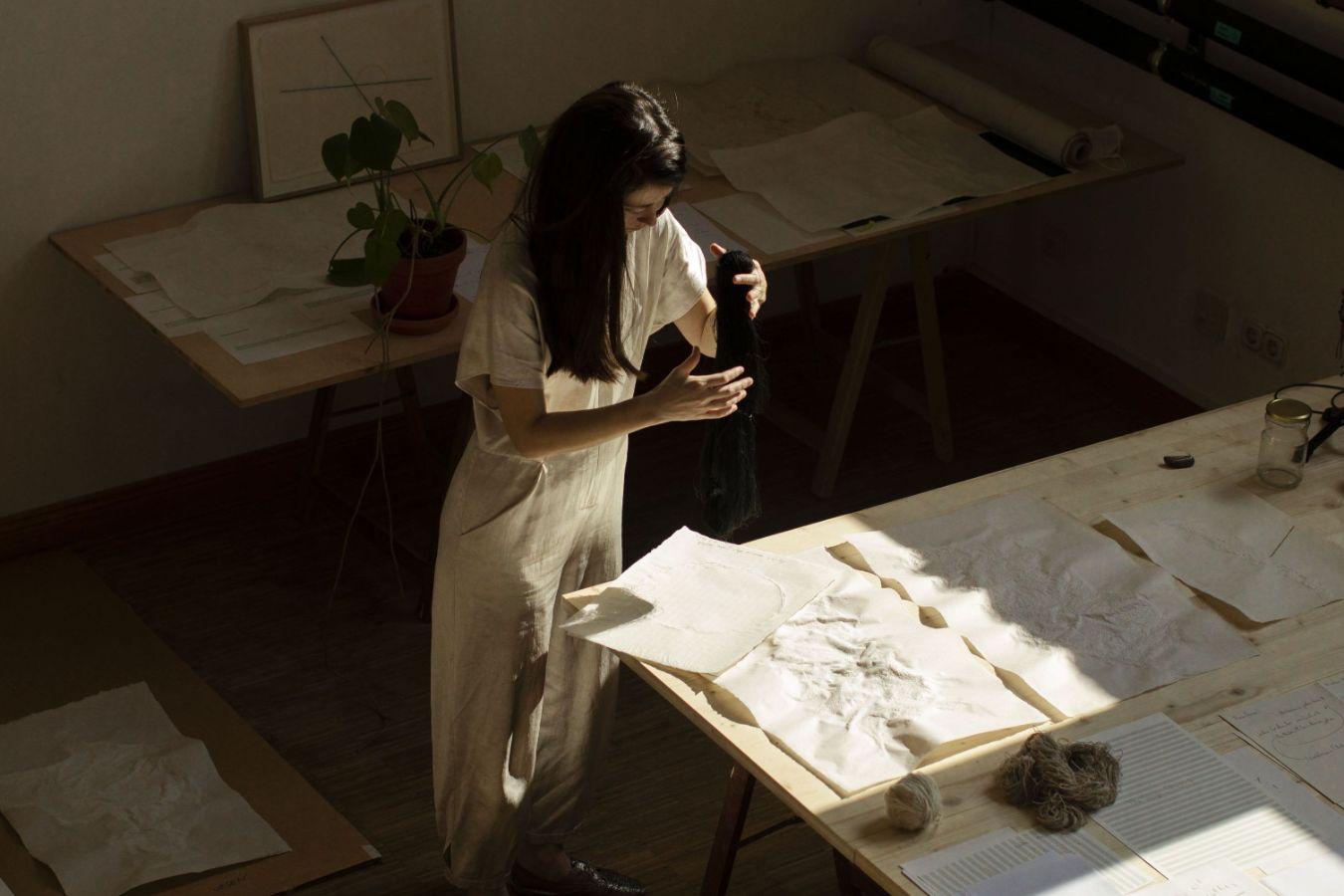
AP: Every workshop adds to what I know, and I act a bit like a DJ. Even when it isn’t always visible that I’m actively doing something, I’m holding the space. I don’t always succeed, but I sense when things are getting too much and can then influence the energy. By “holding,” I usually mean giving space. And by “when things get too much,” I mean that something isn’t being heard because something else is too loud. The project engages with the world through sound, and there is currently a great deal happening in the world that is appalling. I can’t hold that. But I pay close attention to how I speak and how I frame the subject. At the start of each workshop, there’s often tea for everyone. This tea isn’t merely a gesture indicating “I’m glad we’re all here together.” For me, it’s already the prelude – and a chance to look everyone in the eye and welcome the moods that are currently coming together in the room.
Ayumi Paul, 2022
© Ayumi Paul, photo: Debora Mittelstaedt
PD: I can understand why this moment of first encounter is so important. All the feelings, questions and moods of the participants – all these dynamics – are incorporated into The Singing Project. Everything that exists beyond the institution also plays a role in this space.
AP: Every workshop, every installation of a workshop, takes courage. I start preparing days before I even set foot in the physical space, thinking about how I’ll design it. For me, the project becomes an installation the moment the doors open and people enter. What takes courage is the fact that this installation cannot be seen – that we’re not yet in an era where what we feel is valued as highly as what we see. And then I also design it so that everyone who comes in influences it, is part of the exchange, and participates from the moment they walk through the door – not just from the moment they start humming. A lot can happen, perhaps even things you don’t necessarily like – and that’s a good thing. The Singing Project could serve as a testing ground: what happens when we perceive everything primarily through sound?
PD: How would you actually describe The Singing Project? Is it a composition, is it a work of art – you just mentioned an “installation” – or is it a practice? Which description fits best in your view?
AP: In an art context, the word “practice” best describes it. It’s a collective practice that I initiate. But if I assume that most of what we call reality consists of levels of reality we can’t see with our eyes – and that, therefore, matter doesn’t need to be visible in order to be shaped – then I see The Singing Project as a kind of organism. To outside observers, my work often appears ephemeral, quiet and gentle. But I don’t see it that way. Take its scale, for example: I want this project to encompass the whole world, and in the art context, the project can be anything at all, even a light installation. In Osnabrück, I invited an acoustician who measured the vibrations in the room during a number of sessions. She was also present at several workshops at Gropius Bau. These measurements revealed that the room where people were singing became brighter. And who knows? If one day a great many people around the world were to sing simultaneously and join in the totality of sound on Earth, the Earth might well glow. It’s all possible; it’s not at all inconceivable.
PD: What are your hopes for the future of The Singing Project?
AP: I hope that The Singing Project becomes a habit. And that around the summer solstice, people are simply invited to come and sing. Gropius Bau has no permanent collection, but it’s almost as if the project were already an integral part of the institution. Still, habits need to be nurtured lest they slowly erode and one day disappear.
Ayumi Paul, The Singing Project, 2022
© Ayumi Paul
PD: To close, I’ve brought along a few either/or questions, if you’re up for that. Firstly: Is The Singing Project loud or quiet?
AP: Loud and quiet!
PD: Introverted or extroverted?
AP: That’s difficult. For me, this project is very extreme. It’s so introverted that it’s actually extroverted again.
PD: In unison or polyphonic?
AP: Polyphonic. That said, the beauty of sounds is that they are always both. If I pour colours into a container, they blend together. But with sounds, it’s different: I can pour an infinite number of them into a container, and they can each exist at the same time. Every unison is polyphony.
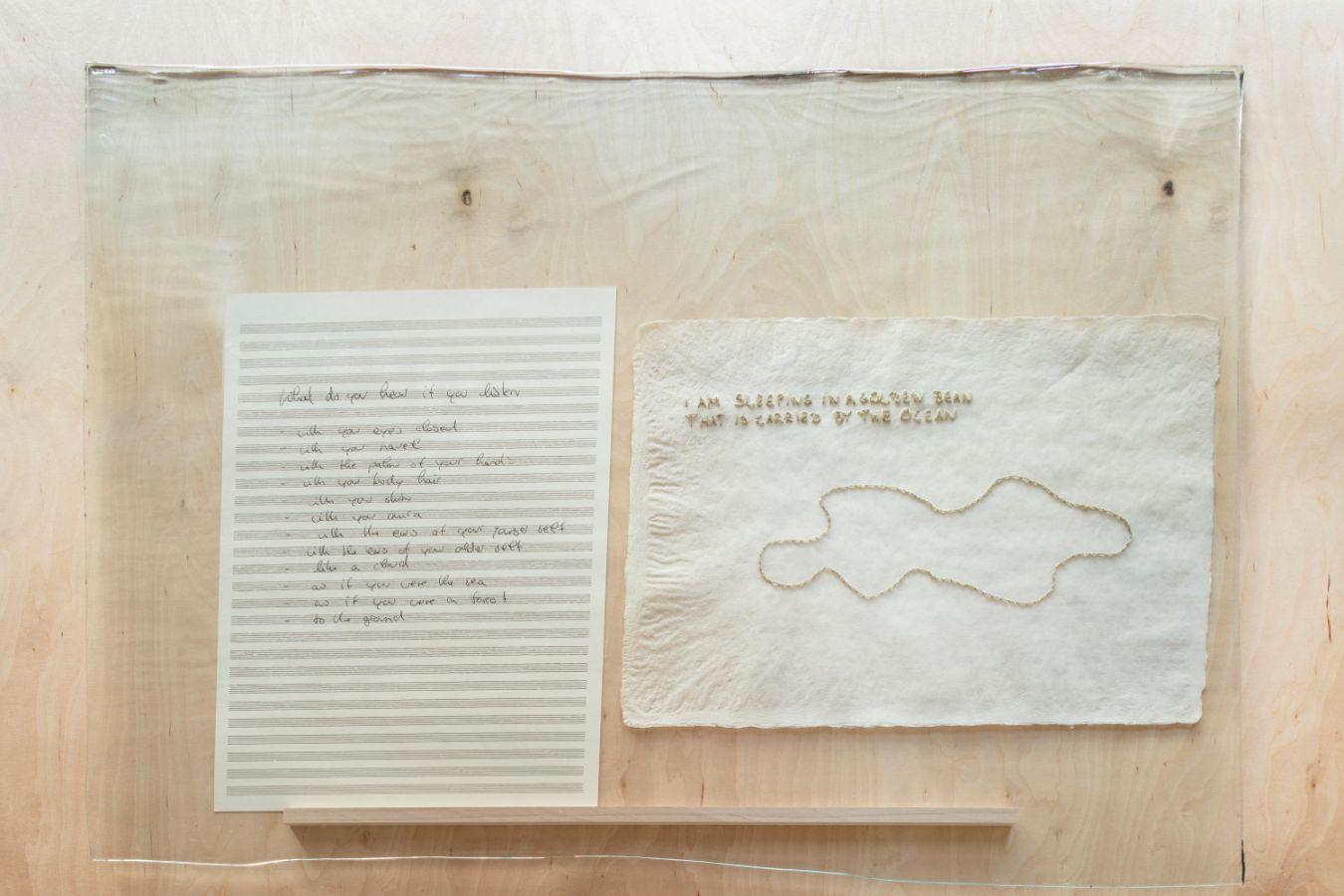
Ayumi Paul, The Singing Project, Gropius Bau, 2022
© Gropius Bau, photo: Luca Girardini
Ayumi Paul is an artist, violinist and composer who explores ways of listening and different perceptions of time. Trained as a classical violinist since the age of five, Paul’s interdisciplinary approach to exploring how sound influences perception dismantles limitations of what we see and how we relate to one another. Her distinctive artistic language incorporates materials such as paper, thread and sound recordings, integrating invisible layers of reality like vibration and imagination as spaces for communal creation. Although she works closely with scientific technologies, she consistently returns to the body and its inherent ways of sensing beyond rational comprehension. Her projects often manifest as new languages, rituals and heightened sensitivities, which can be immediately applied to everyday life. Paul’s work has recently been exhibited at the Georg Kolbe Museum (2024), the Lentos Kunstmuseum Linz (2024) and the Sharjah Biennale (2025), among others. In 2021, she was awarded a fellowship stipend by the German Academy Villa Massimo in Rome.