Readings and Talks | Drama and Discourse

Past as Present

Mehr Drama!: Lennart Kos + Dora Yuemin Cheng
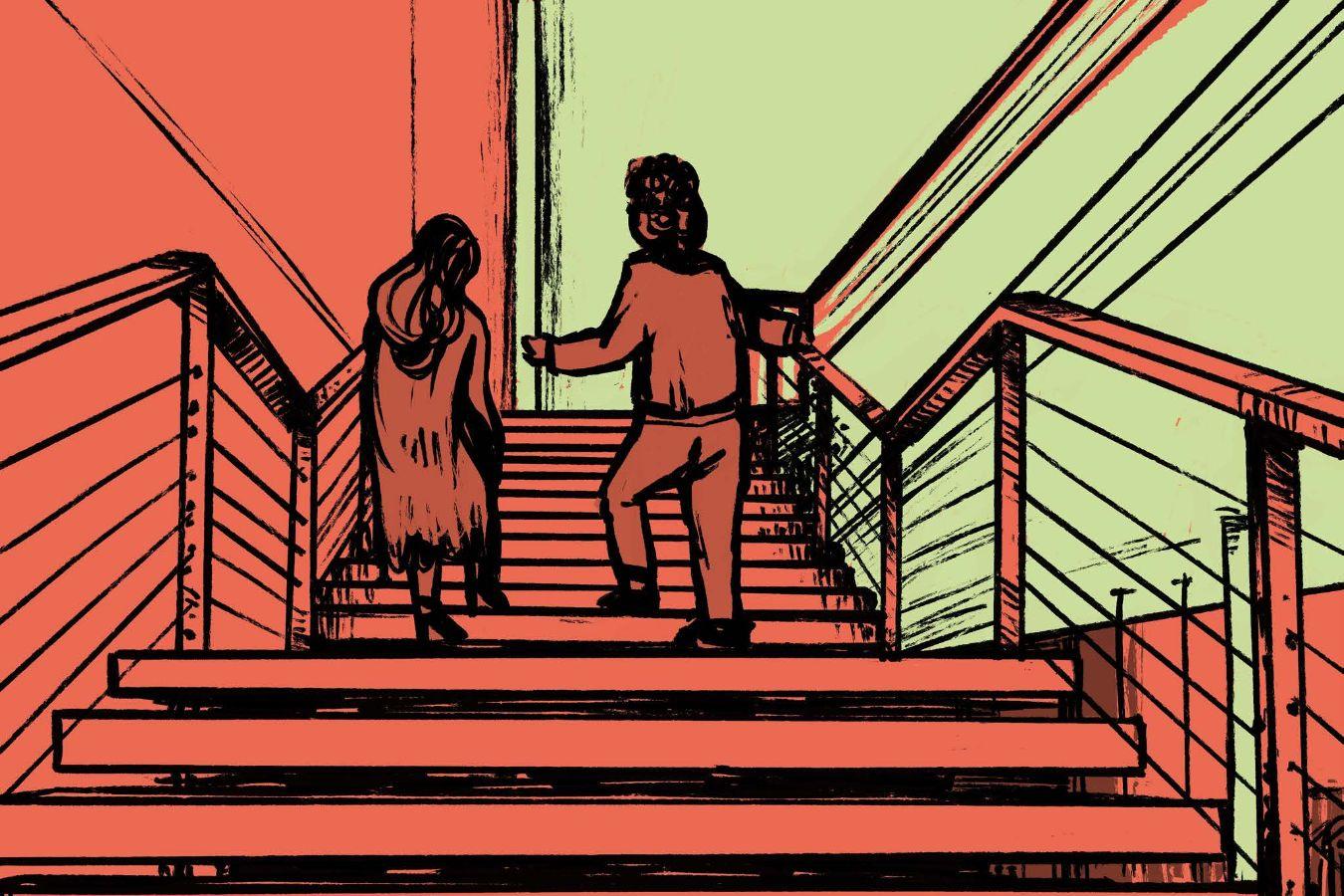
In an illustration in orange and green, two people are walking up the stairs to the upper foyer of the Haus der Berliner Festspiele

© Berliner Festspiele, illustration: 3pc

In the final Mehr Drama! event Lennart Kos and Dora Yuemin Cheng present their texts to the Theatertreffen audience and then talk to the authors who nominated them for the project: Necati Öziri and Ferdinand Schmalz.

Moderation Shirin Sojitrawalla
Dramaturgical Consultation Anna-Katharina Müller

Lennart Kos: IRIDIUM on earth

In the first section of IRIDIUM on earth, a pair of magicians suffer a terrible blow: during a show, Buddy goes blind. A couple in private as well as on stage, they attempt to come to terms with this tragic situation. The mysterious metal iridium might help Buddy regain his past health. In section two, we find ourselves on a space mission that is bringing this rare metal to Earth. Finally, in section three, the Earth has been laid waste, Buddy is alone and briefly has hopes of an intact past. But how worthwhile is holding on to yesterday? Lennart Kos writes an imaginative play rich in dialogue about the happiness – and the tragedy – of human relationships. 

Reading with
Niels Bormann, Sisi Bo’wale and others

Talk between
Lennart Kos and Necati Öziri

Selection Statement

“With IRIDIUM on earth, Lennart Kos has written a quite remarkable, indeed a great play. One in which he does not shy away from asking the really big questions: Is our fate predestined? Can the course of events be influenced by individual decisions? What role do interpersonal intimacy and solidarity have to play in our world’s future? Against the background of a pretty cool sci-fi and outer space scenario, a story unfolds in three parts that uses the simplest means to cast an arc embracing whole universe. The scenes are artfully interlinked, the dialogue – usually between two partners – is masterfully elegant and the characters retain a mystery that resists any simple interpretation of the plot.   
Buddy and Perceval are a famous magical duo as well as a couple off stage. After an accident in one of their stage shows, Buddy has lost his eyesight. In their house in the hills above Las Vegas, they try to come to terms with their new life, but Buddy simply cannot accept what has happened to him. He believes in the power of iridium, a mysterious, ancient metal that has the power to change the past. In part two we accompany the astronauts Noah and Thorin on their space mission to bring the iridium back to Earth. In part three, Earth is a wasteland, Buddy has stayed behind on his own and meets a young woman who might possibly be able to give him the iridium he desires.”  
– Necati Öziri

Dora Yuemin Cheng: Sprache/Spiel 语言·游戏

In Sprache/Spiel 语言·游戏 Dora Yuemin Cheng searches for a form of expression to counteract the forgetting and fading of language, memory and one’s own history. A mother has developed Alzheimer’s and as a result, her own family history in China during the period of the Cultural Revolution is in danger of disappearing. How can we preserve memories, how can we enable a subsequent generation to relate and experience them? And how does a state affect the telling of history? In a unique linguistic form Dora Yuemin Cheng explores the limits of what can be articulated and creates new spaces of possibility in a poetic and touching play.  

Reading with
Kefei Cao and Yun Huang

Talk between
Dora Yuemin Cheng and Ferdinand Schmalz

Selection Statement

“In Dora Yuemin Cheng’s Sprache/Spiel 语言·游戏, a young writer searches between Shanghai and Berlin for her very own language, her individual style and her own story, while her mother’s history is fading. The onset of Alzheimer’s disease threatens to extinguish the mother’s childhood in the China of the Cultural Revolution. Language, which repeatedly appears as a separate character, fights against forgetting, which always takes a double form: firstly personal forgetting and secondly the historical narrative of the state that is based on a deliberate forgetting of the shadowy aspects of the Cultural Revolution. Spanning this arc from the China of the 1960s and 1970s to today, the play finds a many-sided, often agile form where the mother’s chamber pot begins to speak, and Uncle Mao thinks he is Putin. Within this scene, which is an inscription of memory, the ghosts of history appear, as unresolved as ever.”  
– Ferdinand Schmalz